
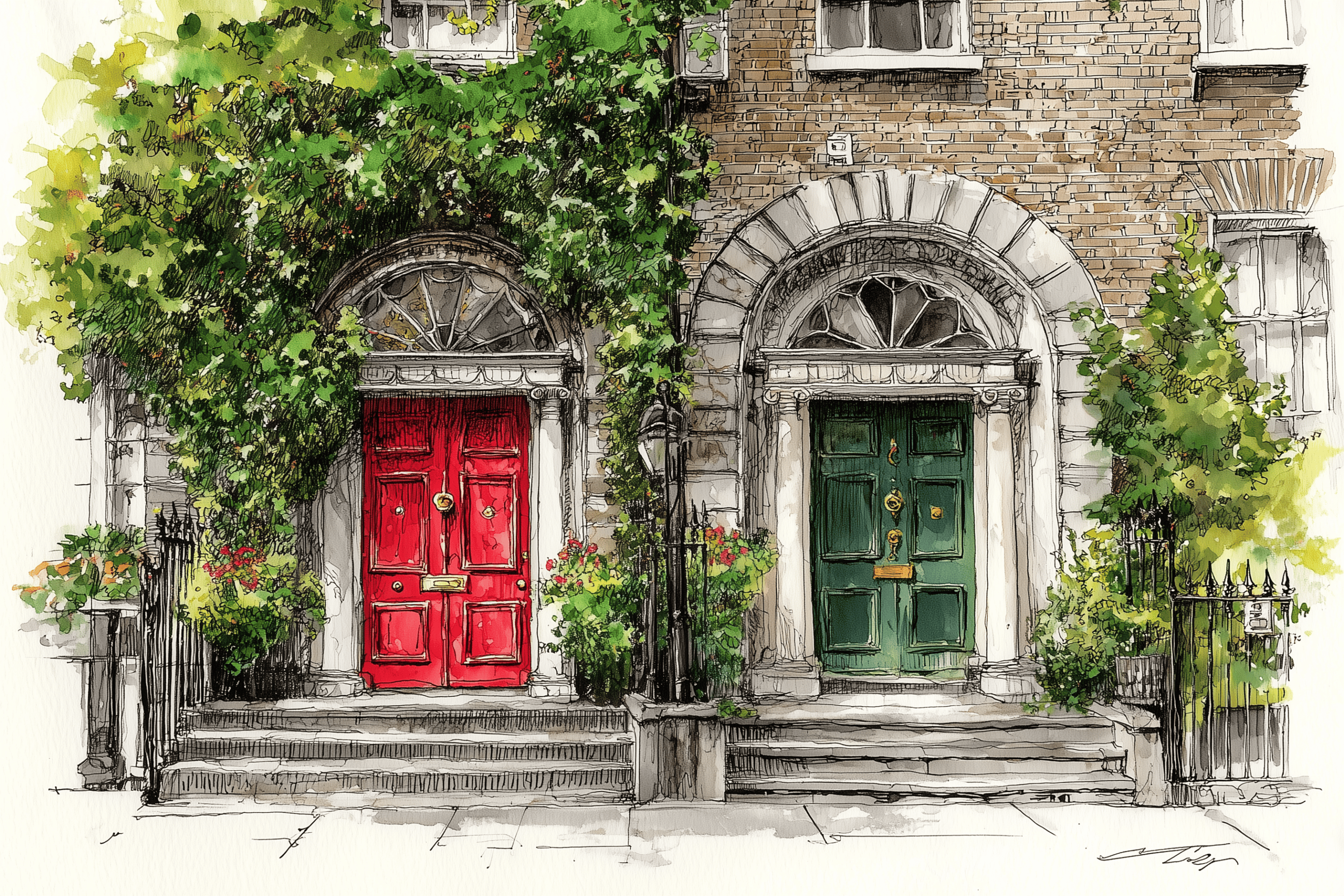
Doors and windows are more than just architectural features; they are invitations to imagine the stories within. From sun-drenched Mediterranean shutters to ivy-covered garden gates, these portals offer the perfect subject for exploring texture, light, and shadow.
In this collection, we’ve gathered 32 door and window watercolor painting ideas to inspire your next session. To help you dive straight into the fun of layering color, we’ve also included printable coloring pages that serve as the perfect ready-to-paint sketches.
Contents
- 1 32 Door & Window Watercolor Ideas (Coloring Pages Available)
- 1.1 The Seaside Archway
- 1.2 The Mediterranean Sea-View Arch
- 1.3 The Sun-Drenched Portal
- 1.4 The Circular Forest View
- 1.5 The Shuttered Window
- 1.6 The Sleeping Cat & Stone Portal
- 1.7 The Elegant Crimson Entrance
- 1.8 The Bougainvillea Arch
- 1.9 The Rustic Red Window
- 1.10 The Sun-Drenched Shuttered Window
- 1.11 Rainy Day Bears
- 1.12 The Flower Box Window
- 1.13 The Stone Masonry Window
- 1.14 The Garden Stone Shrine
- 1.15 The Rustic Arched Window
- 1.16 The Enchanted Violet Portal
- 1.17 The Shuttered Bougainvillea
- 1.18 The Shaded Window Box
- 1.19 The Blue Stairway Portal
- 1.20 The Sunlit Wooden Portal
- 1.21 The Terracotta Village Home
- 1.22 The Garden Path Entrance
- 1.23 The Vintage Flower Box Window
- 1.24 The Stone Arch Portal
- 1.25 The Crimson Cabin Window
- 1.26 The Red Door Cottage
- 1.27 The Rustic Masonry Window
- 1.28 The Kingfisher’s Latch
- 1.29 The Rose-Framed Window
- 1.30 The Sunlit Garden Path
- 1.31 The Pink Wall Window
- 1.32 The Gothic Cathedral Window
- 2 Conclusion
32 Door & Window Watercolor Ideas (Coloring Pages Available)
The Seaside Archway
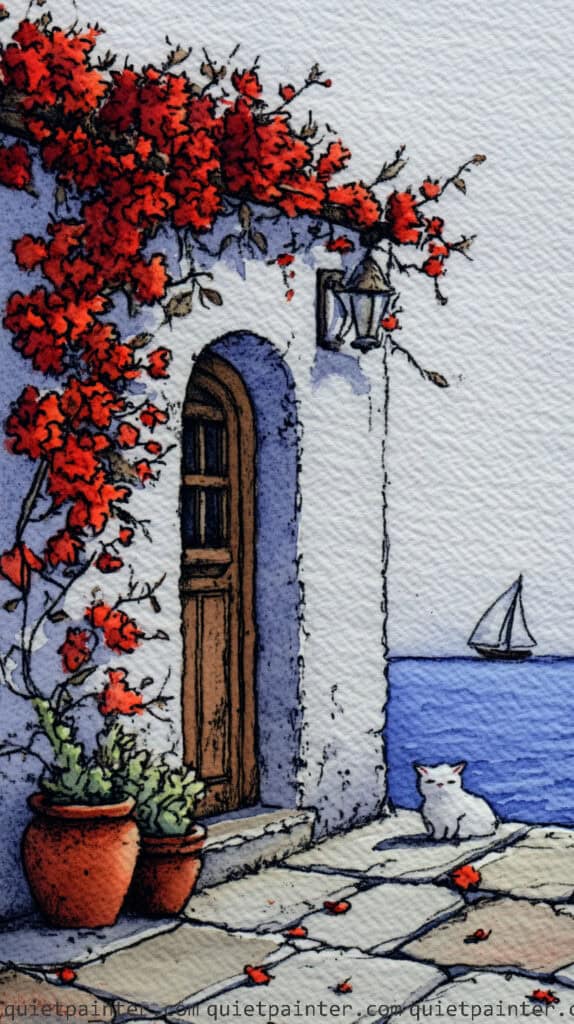
Begin with a delicate ink drawing to establish the arched doorway, the texture of the stone pavers, and the distant silhouette of the sailboat. For the sea and sky, apply a graduated wash of bright blue, keeping the horizon line sharp to separate the two elements. Use a wet-on-wet technique for the cascading bougainvillea, dropping in saturated reds and oranges, then allowing some of the pigment to bleed into a soft violet shadow on the white wall to suggest depth and bright sunlight.
To finish, wash the terracotta pots and the wooden door in warm earth tones, adding vertical lines for the door planks once the base is dry for structural clarity. Use a multi-tonal wash for the cobblestones, alternating between warm ochres and cool greys, and leave the white cat as the pure white of the paper to act as a high-contrast focal point. Finally, glaze a crisp, diagonal shadow across the patio using a diluted violet-blue, which grounds the scene and enhances the feeling of a warm, sun-drenched afternoon by the coast.
Recommended Color Palette
| Element | Recommended Pigments |
| Sea & Sky | Cerulean Blue, Cobalt Blue |
| Bougainvillea | Cadmium Red, Pyrrol Orange |
| Door & Pots | Burnt Sienna, Raw Umber, Yellow Ochre |
| Shadows & Cat Details | French Ultramarine, Dioxazine Purple, Payne’s Grey |
| Patio Stones | Raw Sienna, Neutral Tint, Cobalt Green (diluted) |
The Mediterranean Sea-View Arch
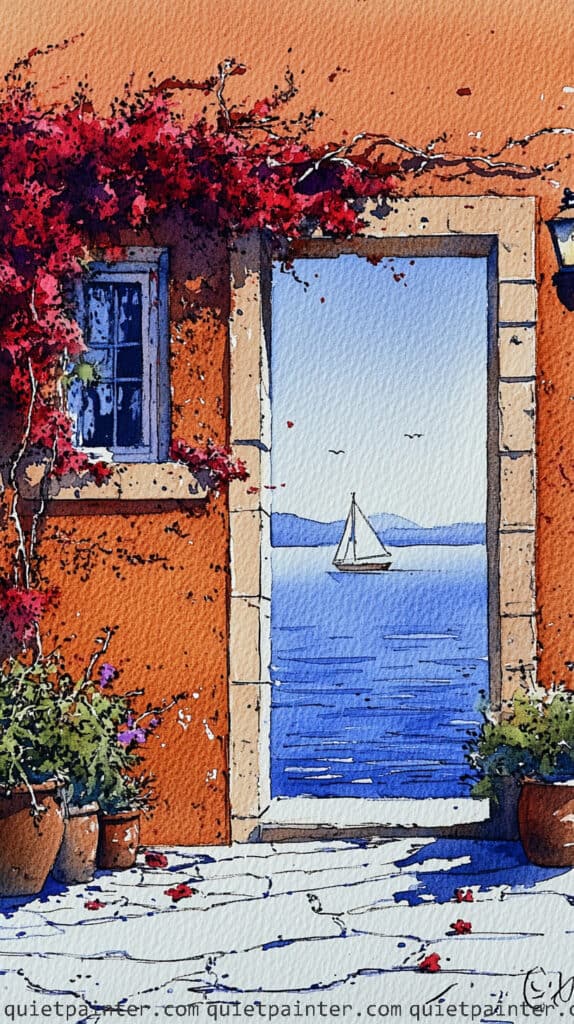
Begin with a clean ink drawing to define the stone archway and the distant sailboat, keeping your lines for the far-off mountains very light to create atmospheric perspective. Apply a graduated wash for the sky and sea, using a more saturated blue at the horizon and fading it as it reaches the foreground patio. For the large terracotta wall, use a variegated wash of orange and red, allowing the colors to mingle on the paper to suggest an aged, sun-bleached stucco texture.
To bring the scene to life, use a wet-on-dry technique to dapple the deep crimson bougainvillea over the arch, letting the shapes remain loose and organic. Glaze a sharp, high-contrast shadow across the patio floor and the left side of the stone arch using a mix of violet and indigo; this shadow is essential for creating the feeling of a bright, sun-drenched coastal afternoon. Finish by detailing the potted plants and adding tiny ripples in the water around the boat with a fine-tipped brush to anchor the composition.
Recommended Color Palette
| Element | Recommended Pigments |
| Sea & Sky | Cerulean Blue, Cobalt Blue |
| Terracotta Wall | Cadmium Orange, Pyrrol Red, Burnt Sienna |
| Stone Arch & Patio | Yellow Ochre, Payne’s Grey (highly diluted) |
| Bougainvillea | Permanent Alizarin Crimson, Quinacridone Magenta |
| Shadows & Deep Contrast | French Ultramarine, Dioxazine Purple |
The Sun-Drenched Portal
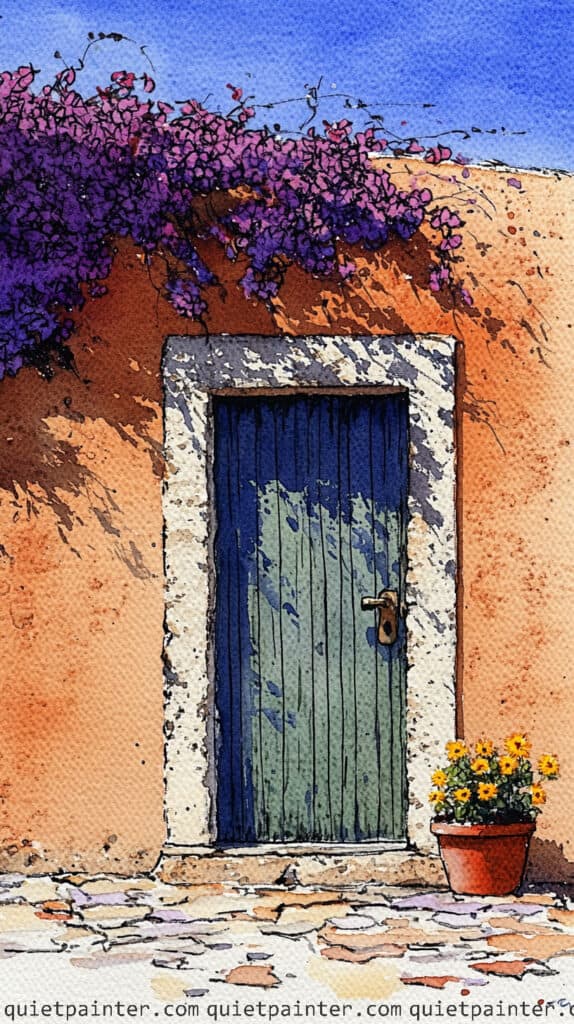
Begin with a clean ink drawing using a waterproof fine-liner to define the weathered stone arch and the vertical planks of the teal door. For the wall, apply a variegated wash of warm ochre and sienna, then while damp, use a “charging” technique to drop in darker spots to suggest aged stucco. Once the wall is dry, glaze the long, jagged shadows across the door and masonry using a mix of ultramarine blue and violet to instantly ground the structure in bright sunlight.
For the focal point, use a saturated wet-on-dry technique to dapple vibrant purple blooms at the top of the arch, allowing some of the pigment to bleed into the wet shadow wash for a soft-focus effect. Paint the cobblestones using a multi-tonal wash of cool greys and warm ochres, leaving some areas of the paper untouched to represent the sun hitting the uneven ground. Finish by adding a tiny, high-contrast yellow flower in the pot to anchor the bottom right corner of the composition.
Recommended Color Palette
| Element | Recommended Pigments |
| Warm Stucco Wall | Yellow Ochre, Raw Sienna, Burnt Umber |
| Teal Door & Sky | Cobalt Teal, Prussian Blue, Cerulean Blue |
| Purple Blooms | Dioxazine Purple, Cobalt Violet |
| Shadows | French Ultramarine, Permanent Alizarin Crimson |
| Stones & Pot | Payne’s Grey, Venetian Red, Raw Umber |
The Circular Forest View
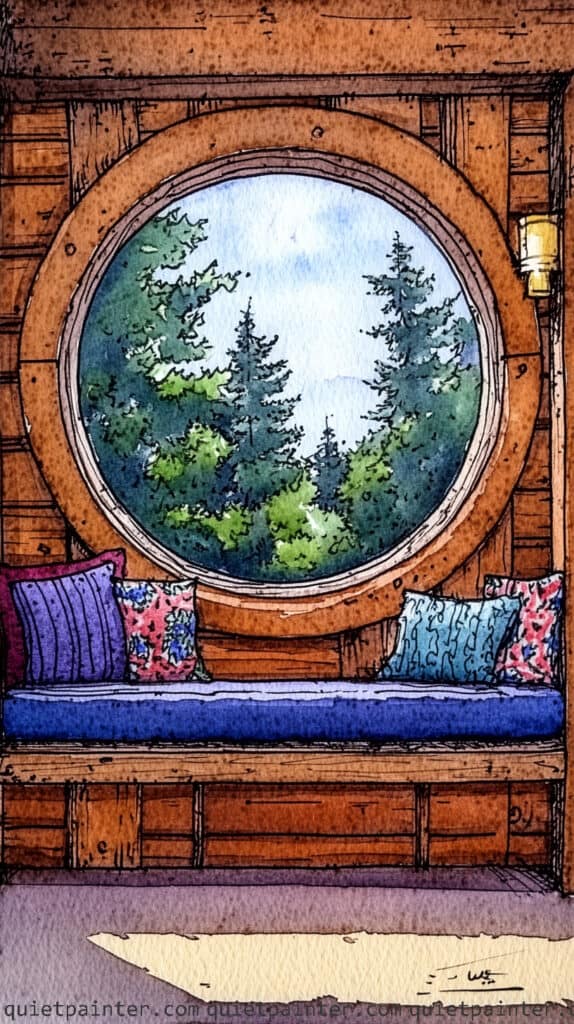
Begin with a precise ink drawing to define the concentric circles of the window frame and the horizontal lines of the wooden interior walls. Use a variegated wash of warm sienna and umber for the woodwork, dropping in darker pigments while damp to suggest natural grain and depth. For the outdoor scene, apply a wet-on-wet technique for the evergreen trees, layering various greens and allowing them to soften into a pale blue-grey sky to create atmospheric perspective.
Focus on the foreground by applying saturated flat washes to the decorative pillows, using vibrant purples and blues to make them pop against the wood. For the window seat cushion, use a deep, solid blue wash to provide a strong visual anchor for the composition. Finish the piece by adding a soft, pale yellow wash to the rug in the foreground, leaving the edges irregular to represent the gentle “spill” of light coming through the circular portal.
Recommended Color Palette
| Element | Recommended Pigments |
| Interior Woodwork | Raw Sienna, Burnt Umber, Sepia |
| Forest Foliage | Sap Green, Perylene Green, Lemon Yellow |
| Cushions & Pillows | Ultramarine Blue, Dioxazine Purple, Quinacridone Rose |
| Sky & Shadows | Cerulean Blue (highly diluted), Payne’s Grey |
| Lamp & Rug Highlights | New Gamboge, Yellow Ochre |
The Shuttered Window
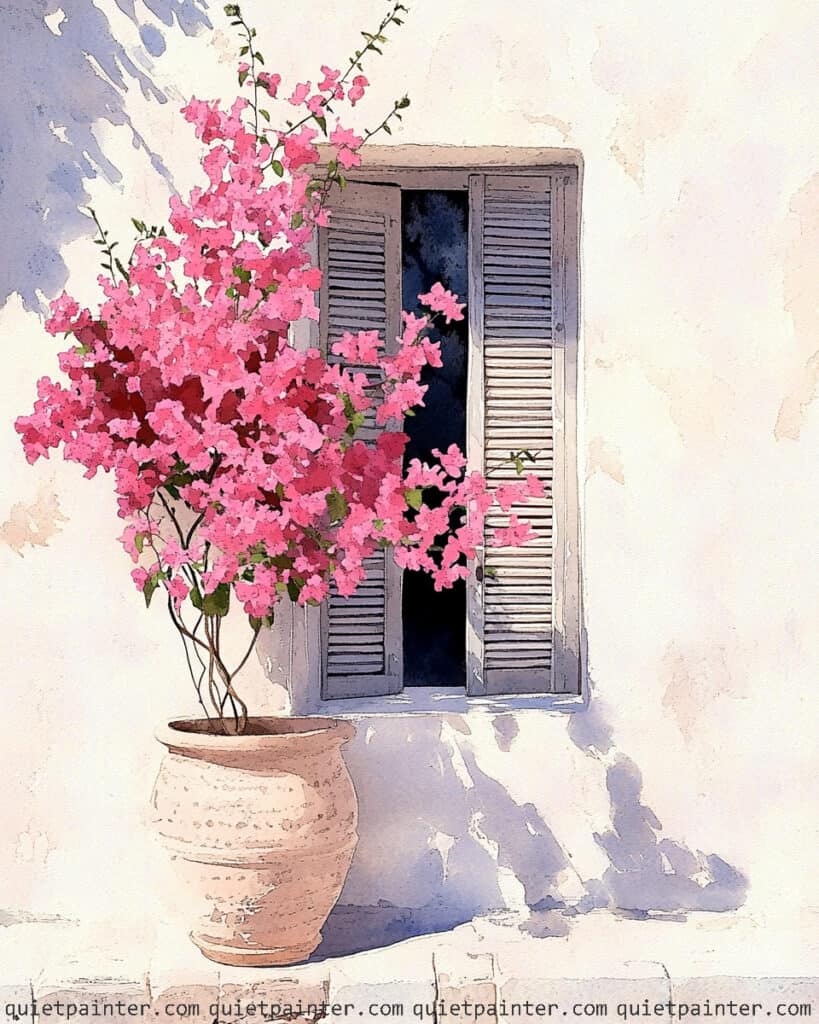
Begin by sketching the window, shutters, and large terracotta pot with light pencil lines, ensuring you leave the majority of the wall area blank to utilize the white of the paper. Apply a variegated wash of pale blue and violet for the cast shadows on the wall, using a wet-on-dry technique to keep the edges of the shadows crisp and well-defined. For the shutters, use a neutral grey or desaturated blue, leaving thin white gaps between the slats to suggest architectural detail and reflected light.
To bring the scene to life, use a saturated dabbing technique for the bougainvillea, layering several shades of pink and magenta to create a sense of lush volume. For the terracotta pot, apply a warm, textured wash of sienna and ochre, deepening the pigment on the right side to create a rounded, three-dimensional effect. Finish the piece by painting the window interior with a deep, dark indigo to provide a strong contrast that makes the bright floral foreground truly pop.
Recommended Color Palette
| Element | Recommended Pigments |
| Pink Bougainvillea | Quinacridone Magenta, Opera Rose, Permanent Rose |
| Cast Shadows | Cobalt Violet, Ultramarine Blue (highly diluted) |
| Shutters & Interior | Payne’s Grey, Indigo, Neutral Tint |
| Terracotta Pot | Burnt Sienna, Yellow Ochre, Raw Umber |
| Stems & Foliage | Sap Green, Olive Green |
The Sleeping Cat & Stone Portal
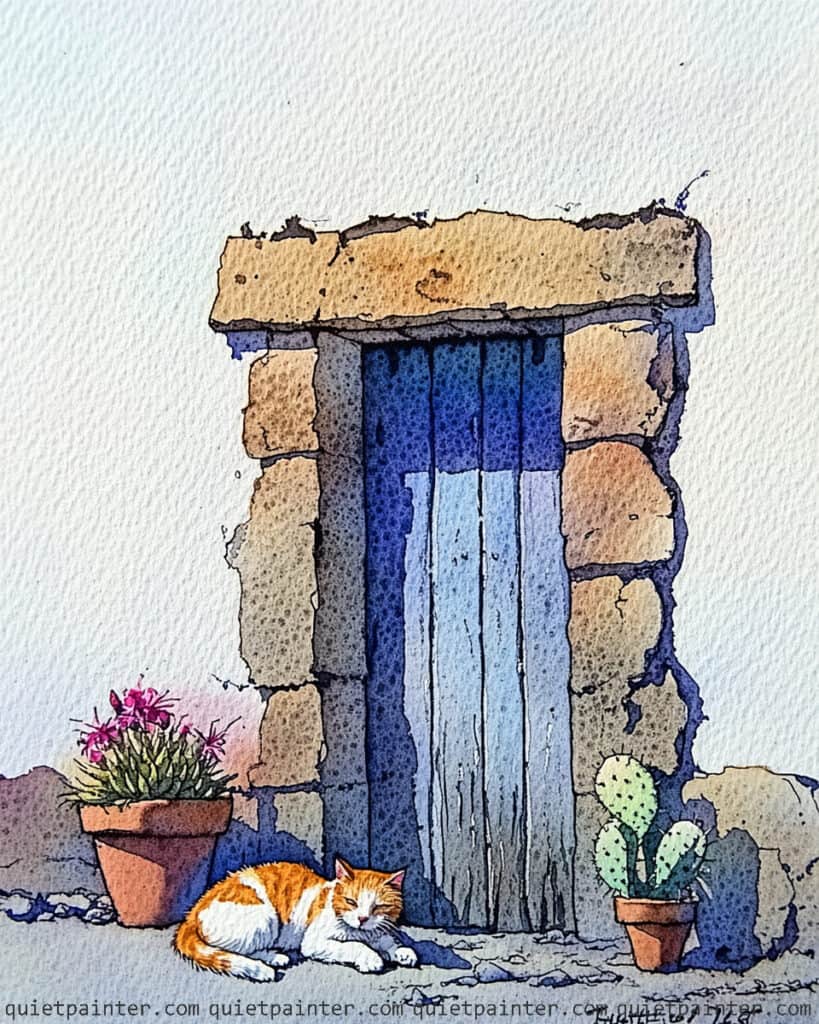
Begin by using a waterproof fine-liner to sketch the irregular, blocky shapes of the stone arch and the vertical planks of the weathered blue door. For the stones, apply a granulating wash of ochre and grey, allowing the pigments to settle into the paper’s texture to mimic natural rock, while using a variegated wash of cobalt and cerulean for the door to suggest sun-faded paint. Leave the white areas of the cat’s fur as unpainted paper, then drop in a saturated ginger wash for the patches while the paper is damp to achieve a soft, furry edge.
To finish, focus on the high-contrast shadows by glazing a deep, cool violet-blue at the base of the door and beneath the cat to ground them firmly in the scene. Use a dry-brush technique to add fine cracks to the stones and the prickly texture of the cactus in the terracotta pot. Complete the painting with a few vibrant pink dabs for the flowers in the left-hand pot, ensuring they stand out as a bright pop of color against the neutral stone wall.
Recommended Color Palette
| Element | Recommended Pigments |
| Stone Arch | Yellow Ochre, Payne’s Grey, Raw Umber |
| Weathered Blue Door | Cobalt Blue, Cerulean Blue, Indigo |
| Ginger Cat & Pots | Quinacridone Gold, Burnt Sienna |
| Cactus & Foliage | Sap Green, Olive Green |
| Deep Shadows | French Ultramarine, Cobalt Violet |
The Elegant Crimson Entrance
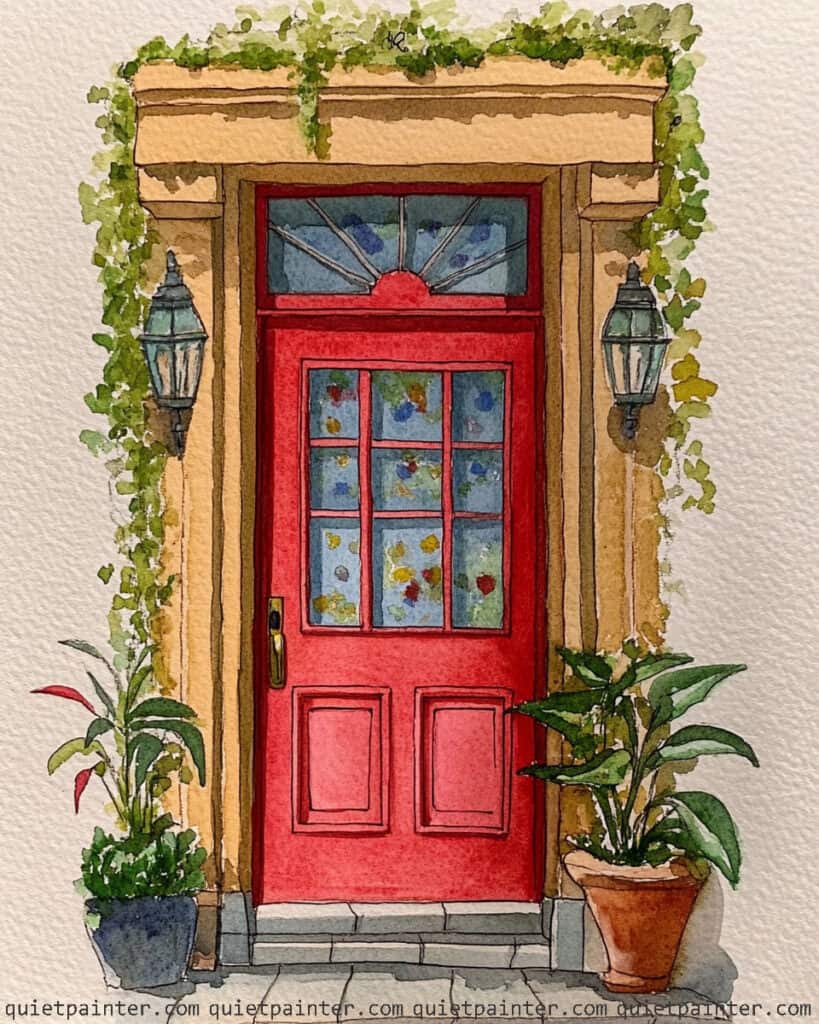
Begin with a precise ink sketch to capture the symmetrical details of the door panels, the arched transom window, and the surrounding stone trim. Apply a flat, saturated wash of bright red for the door, leaving the thin lines of the window mullions and panel molding as white paper to create depth. For the surrounding stone, use a variegated wash of warm ochre and tan, dropping in a few darker spots while wet to suggest the natural texture of masonry.
To bring the scene to life, use a stippling technique with a round brush to dapple various greens for the overhanging vines and potted plants. Add the colorful details within the window panes using small, concentrated dabs of yellow, blue, and red to mimic stained glass reflections. Finish the painting by glazing sharp, cool-grey shadows beneath the door and the lanterns to anchor the structure, and add a light yellow wash to the lantern glass for a warm, inviting glow.
Recommended Color Palette
| Element | Recommended Pigments |
| Crimson Door | Cadmium Red, Permanent Alizarin Crimson |
| Stone Archway | Yellow Ochre, Raw Sienna, Burnt Umber |
| Foliage | Sap Green, Olive Green, Perylene Green |
| Lantern Glow | New Gamboge, Lemon Yellow |
| Shadows & Steps | Payne’s Grey, French Ultramarine |
The Bougainvillea Arch
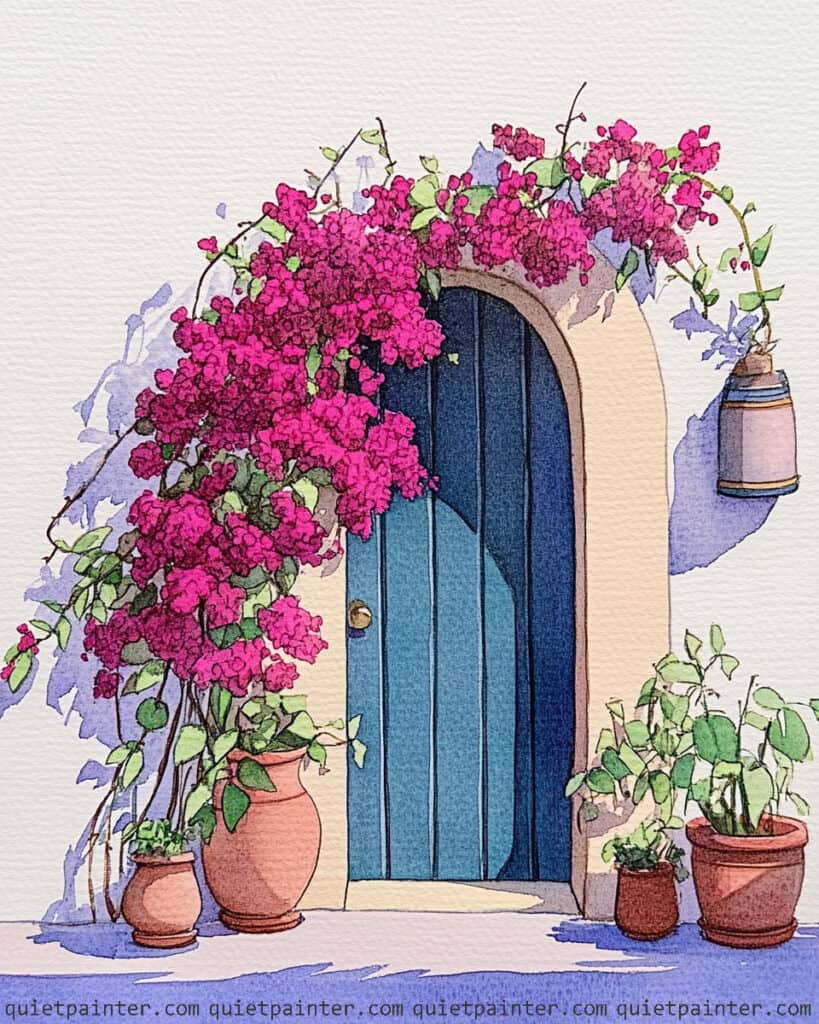
Begin with a light pencil sketch to define the archway and the vertical planks of the blue door, leaving the wall area largely blank to utilize the white of the paper. Apply a variegated wash of teal and deep blue for the door, then immediately glaze the large, diagonal shadow across the wall using a diluted mix of violet and blue. For the bougainvillea, use a saturated dabbing technique, layering several shades of magenta and pink while the paper is slightly damp to create a sense of full-bloom volume.
Focus on the foreground by washing the terracotta pots in warm sienna, adding a darker tone on the right side to suggest a rounded, three-dimensional form. Use a fine brush to add the delicate green leaves and trailing stems, ensuring some of them overlap the shadow areas to heighten the sense of depth. Finish by adding the dark, rectangular detail of the hanging lantern and a crisp shadow at the base of the scene to ground the structure and emphasize the bright, midday sun.
Recommended Color Palette
| Element | Recommended Pigments |
| Pink Bougainvillea | Quinacridone Magenta, Opera Rose, Permanent Rose |
| Blue Door | Cobalt Teal, Prussian Blue, Indigo |
| Wall Shadows | Cobalt Violet, Ultramarine Blue (highly diluted) |
| Terracotta Pots | Burnt Sienna, Yellow Ochre |
| Foliage | Sap Green, Olive Green |
The Rustic Red Window
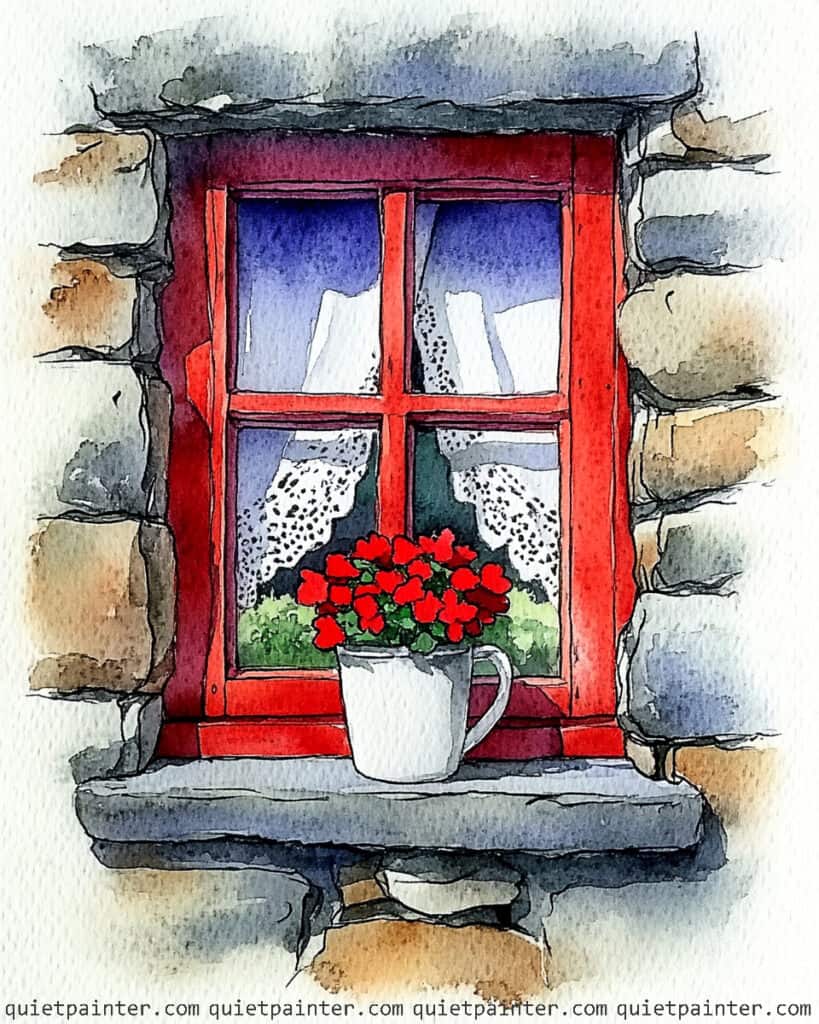
Begin by sketching the large, blocky stones of the wall and the window frame with a waterproof fine-liner, using broken lines to suggest the rough, weathered surface of the rock. Apply a variegated wash of warm greys and ochres to the stones, and while the paper is still damp, “charge” in darker umber and indigo into the crevices to create depth and shadow. For the window interior, use a negative painting technique around the white lace curtains, filling the background with a deep, desaturated violet to make the delicate patterns stand out.
Next, block in the window frame with a saturated flat wash of bright red, leaving small slivers of white paper on the edges to represent sunlit highlights. Use a stippling motion to paint the red flowers in the white mug, layering different saturations to create a sense of full, three-dimensional blooms. Finish the piece by glazing a cool-toned shadow beneath the window sill and the mug using a diluted Payne’s Grey, which grounds the objects and defines the strong, directional light hitting the facade.
Recommended Color Palette
| Element | Recommended Pigments |
| Red Frame & Flowers | Cadmium Red, Permanent Alizarin Crimson |
| Stone Wall | Yellow Ochre, Raw Umber, Payne’s Grey |
| Window Interior | Cobalt Violet, Indigo (highly diluted) |
| Foliage | Sap Green, Hookers Green |
| Deep Shadows | Neutral Tint, French Ultramarine |
The Sun-Drenched Shuttered Window
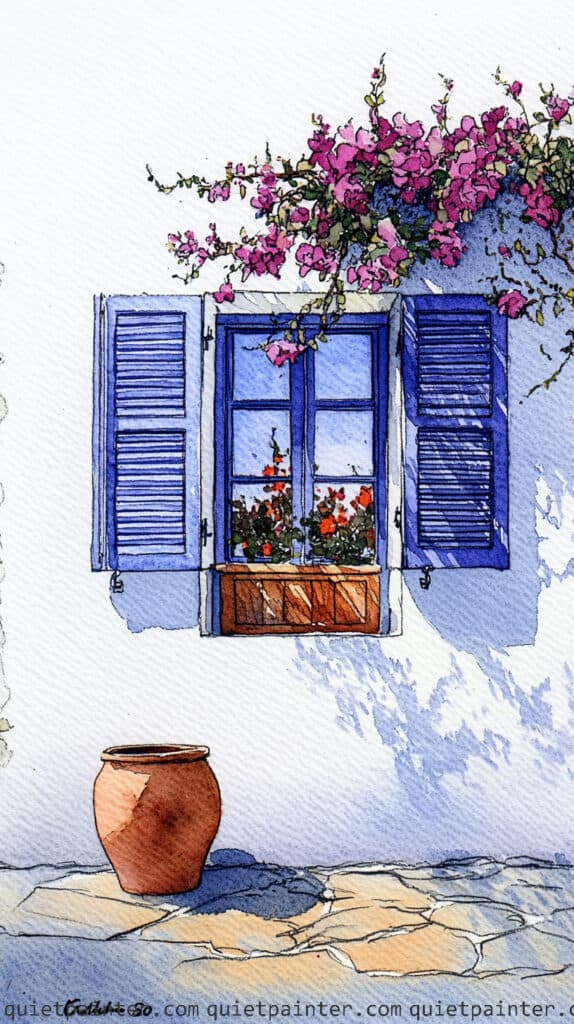
Begin with a precise ink drawing to define the window, its open shutters, and the terracotta pot, making sure to keep the large wall area blank to utilize the white of the paper. Apply a variegated wash of vibrant blue and lavender for the shutters, then immediately glaze the dramatic, jagged shadows across the lower half of the wall using a diluted mix of violet and indigo. While the paper is slightly damp, dapple in the bougainvillea using a saturated wet-on-dry technique, allowing the rich pinks to mingle with the shadow edges for a soft, natural feel.
For the lower foreground, wash the terracotta pot in warm sienna and use a multi-tonal wash of ochre and grey for the cobblestones. Add the small red flowers in the window box with concentrated dabs of pigment to create a bright focal point behind the glass. Finish by glazing a crisp, dark shadow beneath the pot and along the base of the wall to ground the composition and emphasize the brilliance of the overhead sun.
Recommended Color Palette
| Element | Recommended Pigments |
| Pink Bougainvillea | Quinacridone Magenta, Opera Rose |
| Blue Shutters | Cobalt Blue, French Ultramarine |
| Wall Shadows | Cobalt Violet, Ultramarine Blue (diluted) |
| Terracotta & Stones | Burnt Sienna, Yellow Ochre, Raw Umber |
| Foliage | Sap Green, Olive Green |
Rainy Day Bears
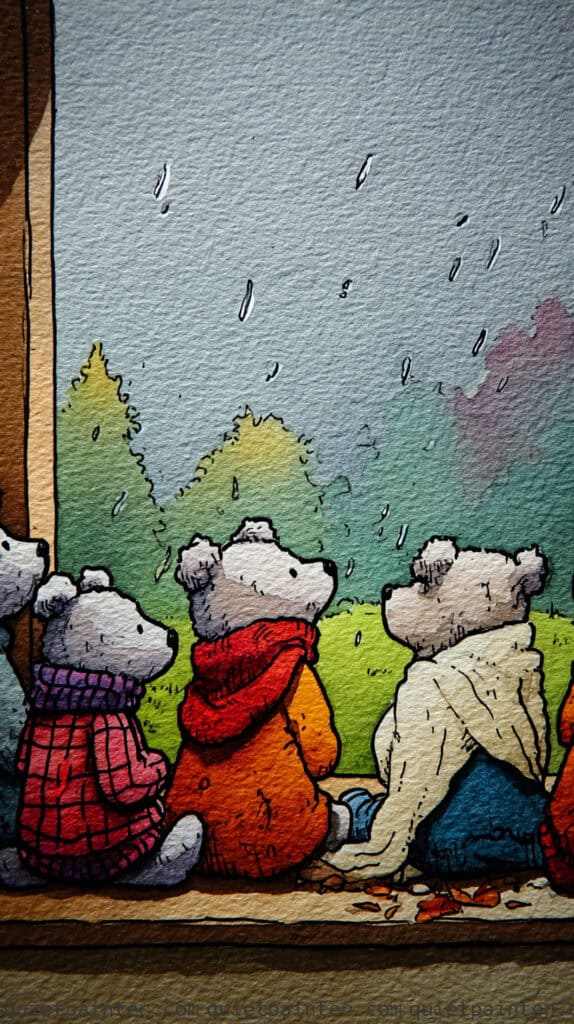
Begin with a clean ink sketch of the bears and the window frame, using a waterproof fine-liner to capture the varied textures of their hoodies and knit sweaters. For the outdoor scenery, apply a wet-on-wet wash of muted greens and soft purples, allowing the colors to blur together to represent a rainy, distant treeline. While the background is still slightly damp, use a “lifting” technique with a clean, thirsty brush or a touch of white gouache to create the vertical, falling raindrops against the glass.
To bring the bears to life, apply saturated variegated washes of orange, red, and blue to their clothing, dropping in darker tones in the folds to create three-dimensional volume. Use a dry-brush technique with a warm brown to add a soft, fuzzy texture to the bears’ fur where it peeks out from their hoods. Finish the piece by glazing a deep, warm brown on the windowsill and adding a sharp, horizontal shadow at the base to ground the characters and emphasize the indoor warmth.
Recommended Color Palette
| Element | Recommended Pigments |
| Rainy Background | Sap Green (diluted), Cerulean Blue, Cobalt Violet |
| Cozy Sweaters | Pyrrol Orange, Cadmium Red, Phthalo Blue |
| Teddy Bear Fur | Raw Sienna, Burnt Umber |
| Windowsill | Burnt Sienna, Sepia |
| Raindrops | Titanium White Gouache |
The Flower Box Window
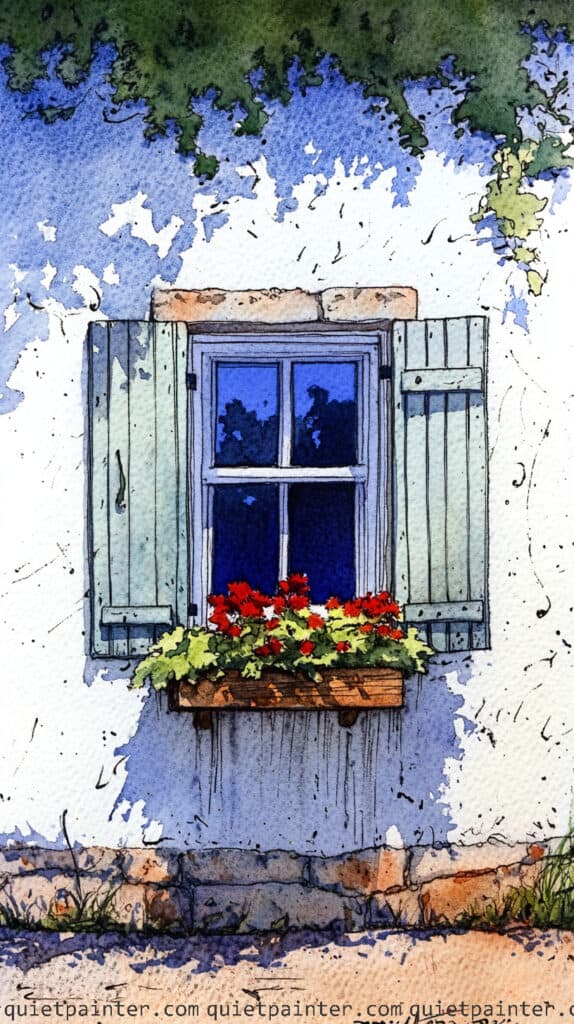
Begin by sketching the window, its shutters, and the window box with a waterproof fine-liner, leaving the stucco areas mostly blank to utilize the white of the paper. Apply a variegated wash of pale blue and lavender for the shutters and the large, jagged shadow cast beneath the window box, keeping the edges soft to suggest bright, indirect light. For the window glass, use a saturated wet-on-dry application of deep indigo, leaving a few thin horizontal slivers of unpainted paper to represent sunlit reflections.
To bring the focal point to life, use a stippling technique with a round brush to dapple bright red dots for the geraniums, letting some overlap the green leaves while the paint is slightly damp. Paint the wooden window box in a warm umber, and use a granulating wash of ochre and sienna for the stone foundation at the base of the wall to add textural contrast. Finish the piece by adding loose, gestural green strokes for the overhanging foliage at the top, allowing some “sparkle” of white paper to show through to mimic sunlight filtering through leaves.
Recommended Color Palette
| Element | Recommended Pigments |
| Sky & Shadows | Cerulean Blue, Cobalt Violet |
| Shutters | Cobalt Blue (highly diluted), Payne’s Grey |
| Geraniums | Cadmium Red, Permanent Alizarin Crimson |
| Window & Box | Indigo, Burnt Umber, Sepia |
| Stone & Stucco | Yellow Ochre, Raw Sienna, Neutral Tint |
The Stone Masonry Window
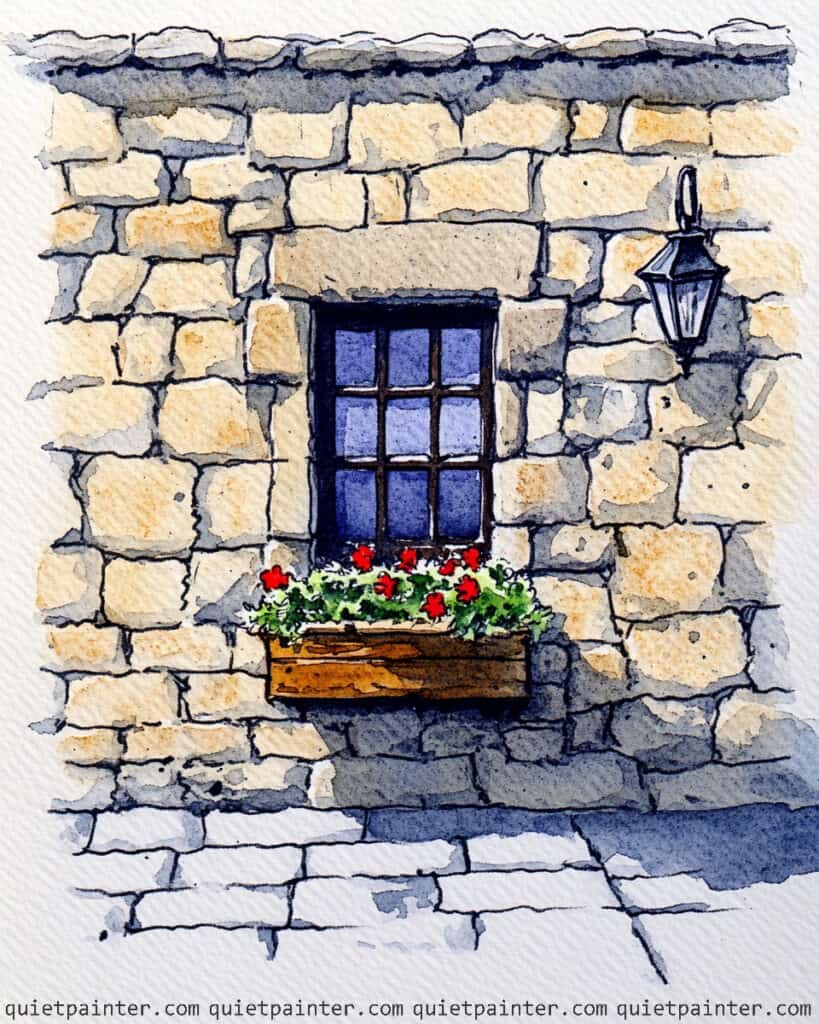
Begin with a detailed ink drawing to define the irregular, blocky shapes of the stones and the precise grid of the window frame. Apply a granulating wash of ochre and raw sienna across the wall, and while the paper is damp, “charge” in some cool grey into the deep crevices between the stones to create a three-dimensional effect. For the window interior, use a saturated flat wash of deep indigo or violet, leaving the cross-bars as white paper to suggest a solid, recessed structure.
To finish, focus on the bright details by using a stippling technique with concentrated red to paint the small flowers in the wooden window box. Apply a warm umber wash to the window box itself, adding horizontal lines for the wood grain once dry. Finally, glaze a crisp, cool shadow beneath the window box and the hanging lantern using a diluted Payne’s grey to anchor the elements and define the strong, overhead light hitting the facade.
Recommended Color Palette
| Element | Recommended Pigments |
| Stone Wall | Yellow Ochre, Raw Sienna, Neutral Tint |
| Window Glass | Indigo, Ultramarine Blue |
| Flowers & Box | Cadmium Red, Burnt Umber, Sap Green |
| Shadows & Lantern | Payne’s Grey, Sepia |
| Pavement | Cobalt Blue (highly diluted), Raw Umber |
The Garden Stone Shrine
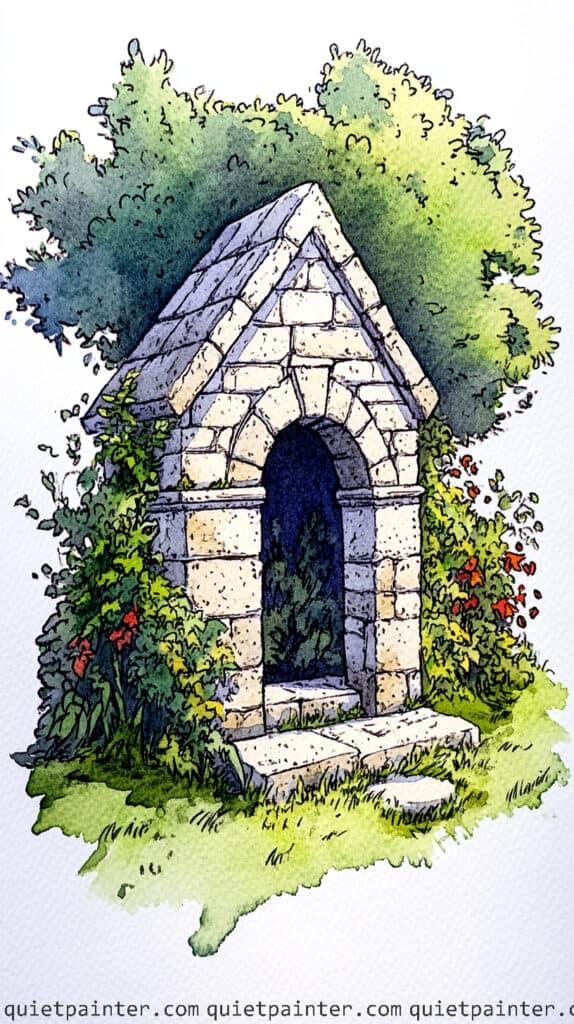
Begin with a detailed ink drawing to capture the blocky, irregular stones of the gabled arch and the dense cluster of overhanging leaves. Apply a variegated wash of pale ochre and cool grey to the stone structure, dropping in darker spots of umber while the paper is damp to suggest age and weathering. For the greenery, use a wet-on-wet technique, layering bright yellows into deep greens to create a sense of sunlight filtering through the canopy.
To finish, paint the interior of the arch with a saturated flat wash of deep indigo to provide a strong sense of internal depth and shadow. Use a stippling motion with a fine brush to add small red flowers tucked into the bushes, which provides a vibrant pop of color against the cool tones. Complete the piece by glazing a cool violet shadow at the base of the shrine to ground it firmly in the soft, grassy clearing.
Recommended Color Palette
| Element | Recommended Pigments |
| Stone Structure | Yellow Ochre, Payne’s Grey, Raw Umber |
| Lush Foliage | Sap Green, Lemon Yellow, Hooker’s Green |
| Deep Shadows | Indigo, Ultramarine Blue |
| Floral Accents | Cadmium Red, Permanent Rose |
| Ground & Grass | Olive Green, Burnt Sienna |
The Rustic Arched Window
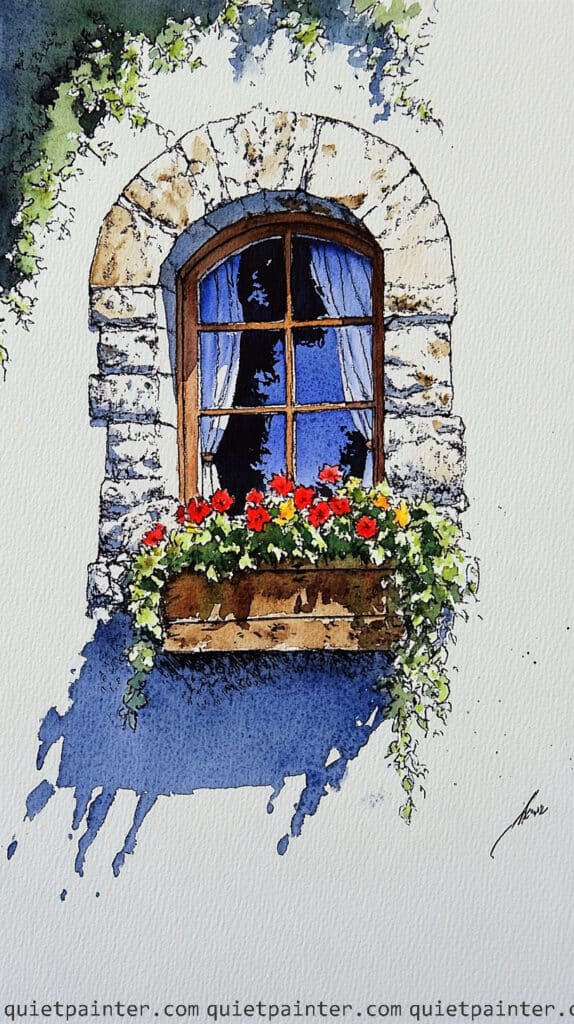
Begin by sketching the large, irregular stones of the arch and the wooden window box with a waterproof fine-liner, using broken lines to suggest the rough, weathered surface of the rock. Apply a granulating wash of warm ochre and pale grey to the stonework, and while the paper is still damp, “charge” in darker umber into the deep crevices to create a sense of three-dimensional depth. For the window glass, apply a saturated wet-on-dry wash of deep blue, leaving thin vertical slivers of white paper to represent sunlit reflections.
To bring the focal point to life, use a stippling technique with concentrated red and yellow to paint the vibrant flowers in the window box, layering them over a soft green base. Glaze a deep, dramatic shadow beneath the window box using a mix of ultramarine and violet, allowing the bottom edge to break into loose “drip” shapes for a more artistic, expressive feel. Finish by adding trailing ivy with quick, gestural strokes of sap green to ground the window in its garden environment.
Recommended Color Palette
| Element | Recommended Pigments |
| Stone Masonry | Yellow Ochre, Payne’s Grey, Raw Umber |
| Window Box Flowers | Cadmium Red, Lemon Yellow |
| Window Glass | French Ultramarine, Indigo |
| Cast Shadows | Cobalt Violet, Ultramarine Blue |
| Vines & Foliage | Sap Green, Olive Green |
The Enchanted Violet Portal
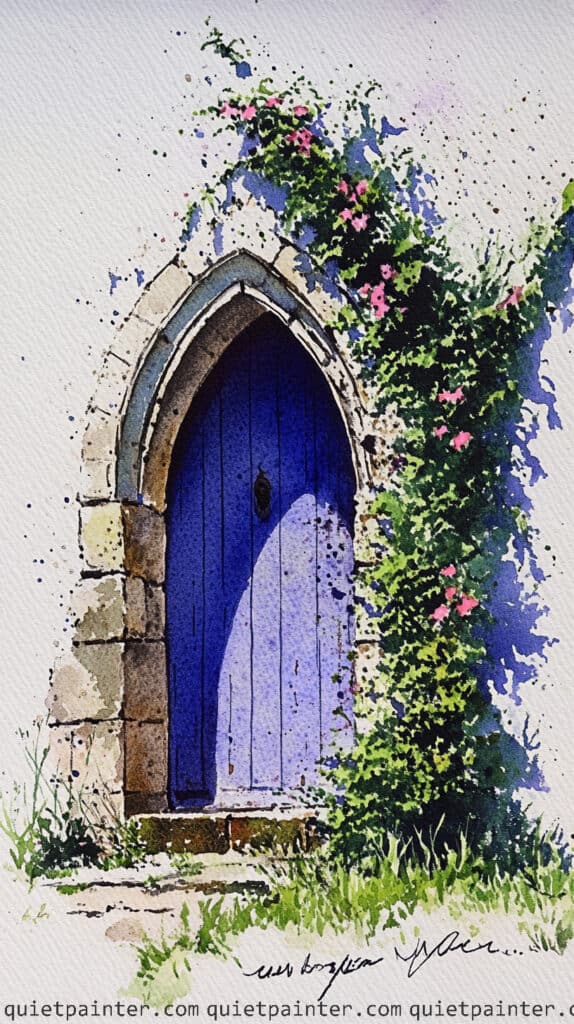
Begin with a precise ink drawing to define the sharp gothic arch and the vertical planks of the door, using expressive, broken lines for the surrounding stone blocks. Apply a variegated wash of deep violet and ultramarine to the door, dropping in a darker indigo on the left side while wet to suggest a heavy cast shadow. For the stonework, use a granulating wash of warm grey and ochre, allowing the pigment to settle into the paper’s texture to mimic the look of weathered, hand-cut rock.
To bring the greenery to life, use a stippling technique with a mix of sap green and deep forest green to create the dense, sprawling ivy on the right. While the green layer is damp, dapple in small, saturated dots of pink and magenta to represent the climbing roses. Finish the piece by using a splatter technique with diluted ink or dark paint to add “texture spots” across the facade and adding a few quick, gestural blades of grass at the base to ground the entrance in its garden environment.
Recommended Color Palette
| Element | Recommended Pigments |
| Gothic Door | Dioxazine Purple, French Ultramarine, Indigo |
| Stone Arch | Yellow Ochre, Payne’s Grey, Raw Umber |
| Ivy & Foliage | Sap Green, Perylene Green, Hookers Green |
| Climbing Roses | Quinacridone Rose, Opera Pink |
| Shadows & Details | Neutral Tint, Sepia |
The Shuttered Bougainvillea
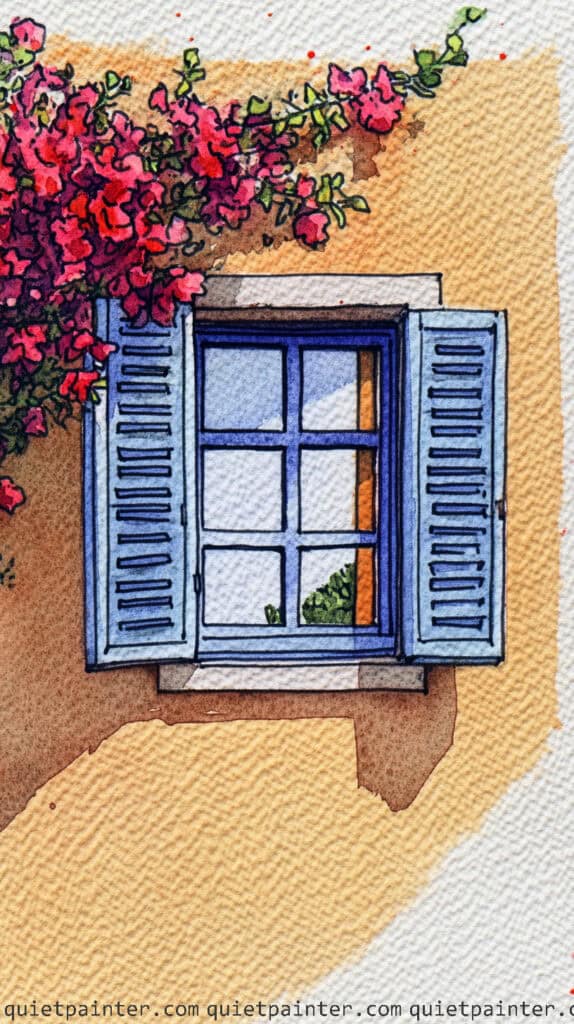
Begin with a light pencil sketch to define the window frame, the open shutters, and the rough outline of the floral clusters. Apply a variegated wash of warm ochre and sienna for the wall, then while damp, drop in a slightly deeper brown for the large, angular shadow cast by the window. For the shutters, use a saturated wet-on-dry application of bright blue, leaving the thin vertical lines of the slats as unpainted white paper to suggest reflected sunlight.
To bring the scene to life, use a stippling technique with concentrated pink and magenta to dapple the bougainvillea blooms at the top. For the window glass, apply a very pale blue wash, leaving a few “sparkle” spots of white paper to mimic the glare of a bright sky. Finish by adding a tiny dab of green in the lower window pane to suggest a reflection of nearby foliage, and use a fine brush to add a few red “splatter” dots to represent falling petals against the wall.
Recommended Color Palette
| Element | Recommended Pigments |
| Blue Shutters | Cobalt Blue, Cerulean Blue |
| Bougainvillea | Quinacridone Magenta, Opera Pink |
| Sun-Bleached Wall | Yellow Ochre, Raw Sienna |
| Cast Shadows | Burnt Umber, Neutral Tint (diluted) |
| Foliage & Reflections | Sap Green, Phthalo Blue |
The Shaded Window Box
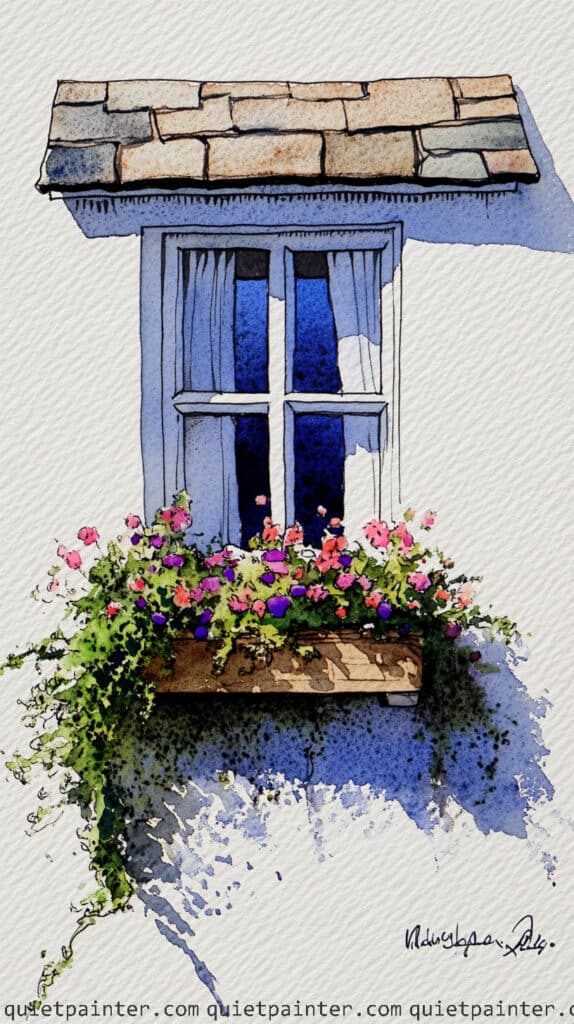
Begin with a light ink sketch to define the stone roof tiles, the window frame, and the wooden planter box. For the window glass, apply a saturated wet-on-dry wash of deep indigo, leaving a few thin, vertical white gaps to represent the interior lace curtains. Use a variegated wash of cobalt blue and lavender for the large, expressive shadow beneath the window, letting the edges stay slightly irregular to suggest the texture of a stucco wall.
To bring the focal point to life, use a stippling technique to dapple a mix of pink, purple, and orange blooms over a base of bright sap green. While the paint is damp, allow some of the green foliage to bleed into the shadow area to create a soft, natural transition. Finish the piece by adding a warm, textured wash to the stone roof and use a fine brush to add trailing vines that break the bottom edge of the shadow for added depth.
Recommended Color Palette
| Element | Recommended Pigments |
| Floral Blooms | Opera Pink, Dioxazine Purple, Cadmium Orange |
| Shadows | Cobalt Blue, Cobalt Violet |
| Window Interior | Indigo, Prussian Blue |
| Roof & Planter | Raw Sienna, Burnt Umber |
| Foliage | Sap Green, Olive Green |
The Blue Stairway Portal
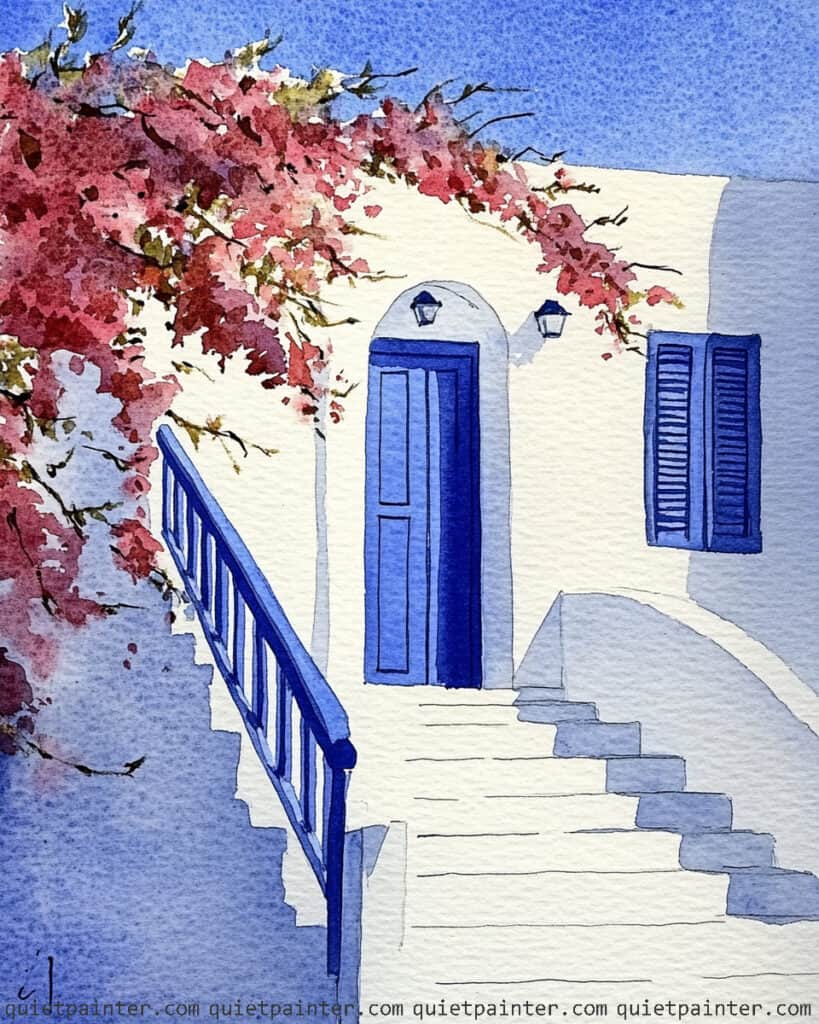
Begin with a clean pencil sketch to define the staircase, the arched doorway, and the rectangular shutters. Use a flat wash of vibrant royal blue for the door and shutters, then apply a series of graduated washes in a pale, dusty violet for the shadows on the stairs and side wall to create a three-dimensional effect. Ensure the edges of your shadows are crisp to suggest the intense, direct sunlight typical of a coastal afternoon.
For the floral elements, use a variegated wet-on-dry technique to dapple pink and magenta blooms across the top left corner, allowing some white paper to peek through for highlights. Once the first layer is dry, add a few deeper crimson dabs to the center of the clusters to provide depth and volume. Finish by using a fine-liner or a small rigger brush to add the delicate, spindly brown branches that connect the blossoms to the wall, grounding the organic forms against the geometric architecture.
Recommended Color Palette
| Element | Recommended Pigments |
| Door, Railing & Shutters | French Ultramarine, Prussian Blue |
| Bougainvillea Blooms | Quinacridone Magenta, Opera Pink |
| Stair & Wall Shadows | Cobalt Violet, Cerulean Blue (diluted) |
| Sky | Cobalt Blue (pale wash) |
| Branches & Details | Burnt Umber, Sepia |
The Sunlit Wooden Portal
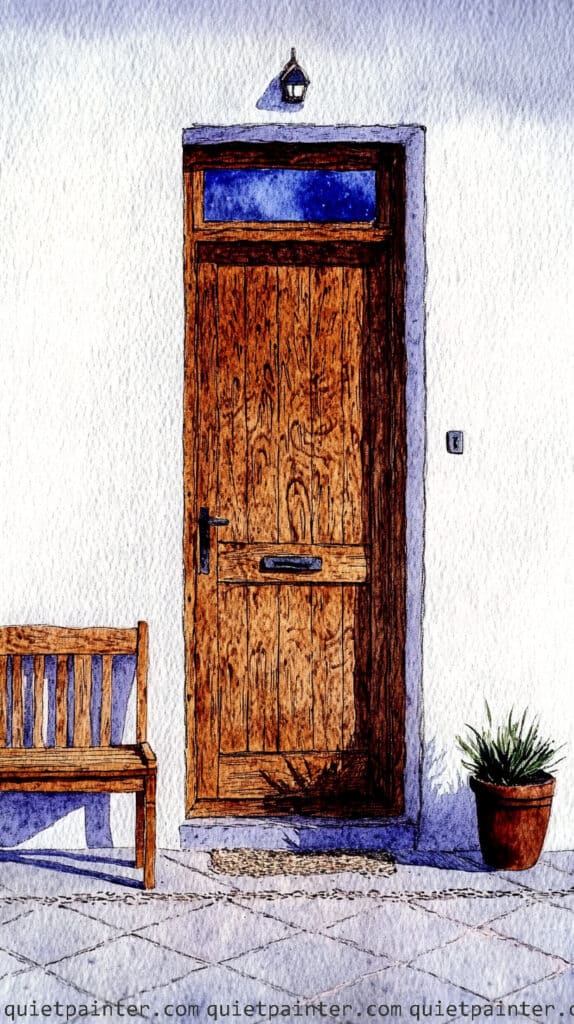
Begin with a detailed ink drawing to capture the intricate, vertical grain of the wooden door and the woven texture of the mat at its base. Apply a variegated wash of warm sienna and umber for the door, using a fine brush to “charge” in darker pigments along the grain lines while the paper is damp to suggest aged timber. For the transom window above the door, use a saturated wet-on-dry application of deep indigo to create a sense of interior depth, leaving a few tiny white flecks to mimic the sparkle of glass.
To finish, glaze a series of crisp, cool-toned shadows across the white wall, the wooden bench, and the patio using a diluted mix of violet and blue. Ensure these shadow edges are sharp and consistent in direction to accurately represent the harsh, direct light of a coastal afternoon. Complete the piece by using a stippling technique for the spiky plant in the terracotta pot and adding a pale grey wash to the tiled patio, leaving the grout lines as white paper for architectural clarity.
Recommended Color Palette
| Element | Recommended Pigments |
| Wooden Door & Bench | Raw Sienna, Burnt Umber, Sepia |
| Transom Window | Indigo, Prussian Blue |
| Cast Shadows | Cobalt Violet, French Ultramarine (diluted) |
| Potted Plant | Sap Green, Perylene Green |
| Patio Tiles | Payne’s Grey (highly diluted), Yellow Ochre |
The Terracotta Village Home
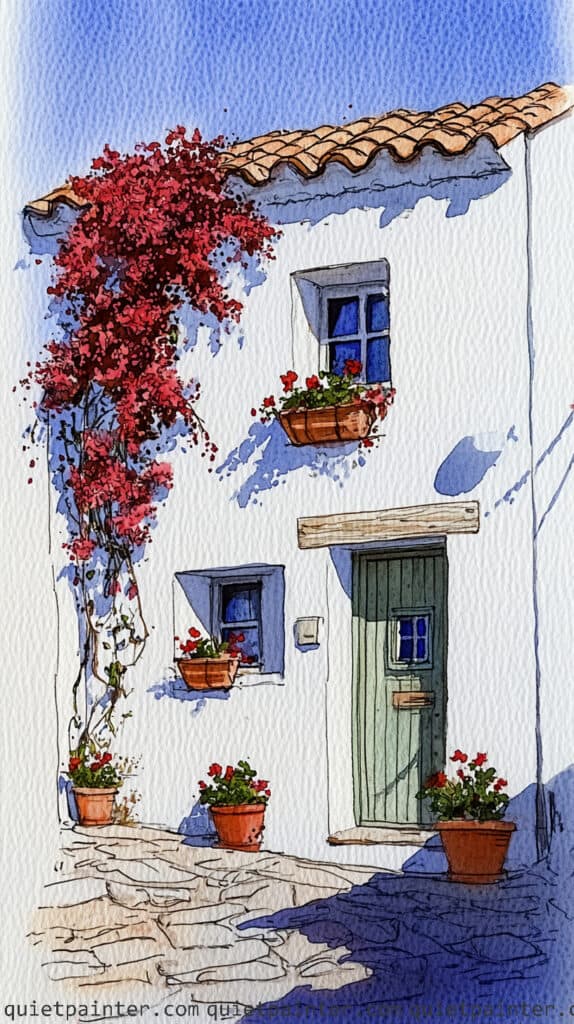
Begin by sketching the two-story house, ensuring you capture the slightly irregular shapes of the windows and the vertical planks of the sage-green door. For the walls, utilize the white of the paper for the brightest highlights, then glaze large, bold shadow shapes across the right side of the building and the cobblestone path using a variegated wash of ultramarine and violet. Ensure these shadow edges are crisp and follow a consistent angle to represent a strong, direct midday sun.
To bring the focal point to life, use a saturated dabbing technique to apply rich crimson and magenta for the climbing bougainvillea on the left. Once the first layer of the plant is dry, add a few dark green strokes for the underlying leaves and spindly brown branches to ground it against the wall. Finish the piece by painting the terracotta roof tiles in warm sienna and the various flower pots in burnt orange, adding a tiny, concentrated dab of deep indigo for the window glass to suggest a cool, dark interior.
Recommended Color Palette
| Element | Recommended Pigments |
| Bougainvillea | Quinacridone Magenta, Alizarin Crimson |
| Building Shadows | French Ultramarine, Cobalt Violet |
| Sage Green Door | Sap Green mixed with Payne’s Grey |
| Roof & Flower Pots | Burnt Sienna, Raw Sienna |
| Windows & Deep Detail | Indigo, Neutral Tint |
The Garden Path Entrance
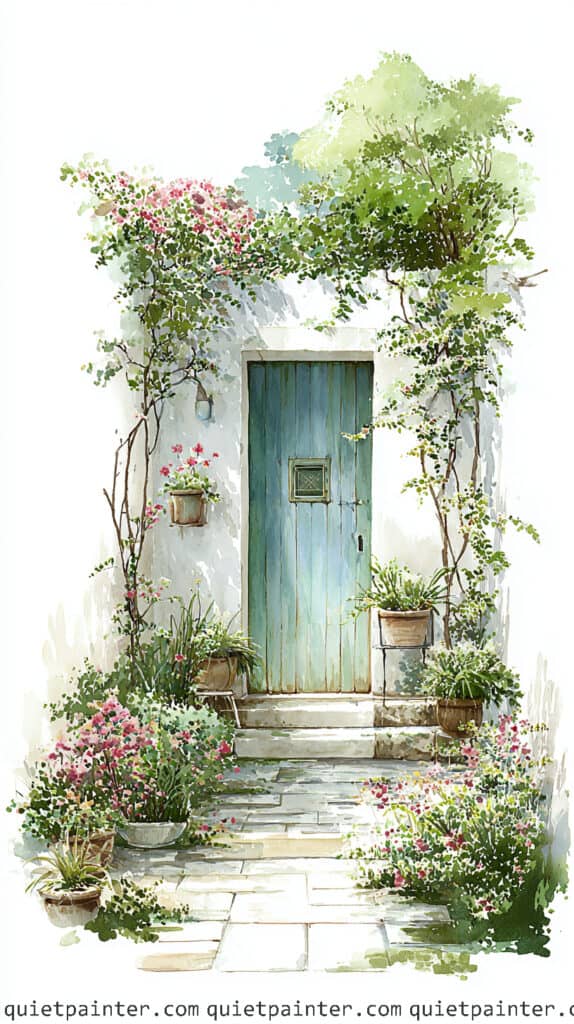
Begin with a light pencil sketch to define the vertical planks of the door and the soft outlines of the surrounding foliage, keeping your lines minimal to allow the watercolor to lead. Apply a variegated wash of pale turquoise and sage green to the door, dropping in a touch of raw sienna at the base to suggest age and weathering. For the surrounding plants, use a wet-on-dry technique with loose, gestural strokes, layering bright lemon yellows into deep sap greens to create a sense of depth and filtered light.
To bring the floral elements to life, use a stippling motion to dapple soft pinks and corals among the leaves, ensuring you leave plenty of white paper visible to mimic the sparkle of the sun. Wash the stone path in a very diluted warm grey, then glaze a few crisp, pale blue shadows beneath the pots and doorframe to ground the scene. Finish by using a fine rigger brush to add thin, spindly branches that connect the overhanging vines to the wall, adding a final touch of architectural detail.
Recommended Color Palette
| Element | Recommended Pigments |
| Sage Green Door | Cobalt Teal, Sap Green, Payne’s Grey |
| Garden Foliage | Lemon Yellow, Hooker’s Green, Olive Green |
| Floral Blooms | Quinacridone Rose, Cadmium Orange (diluted) |
| Terracotta & Path | Burnt Sienna, Yellow Ochre, Neutral Tint |
| Shadows | Cerulean Blue, Cobalt Violet |
The Vintage Flower Box Window
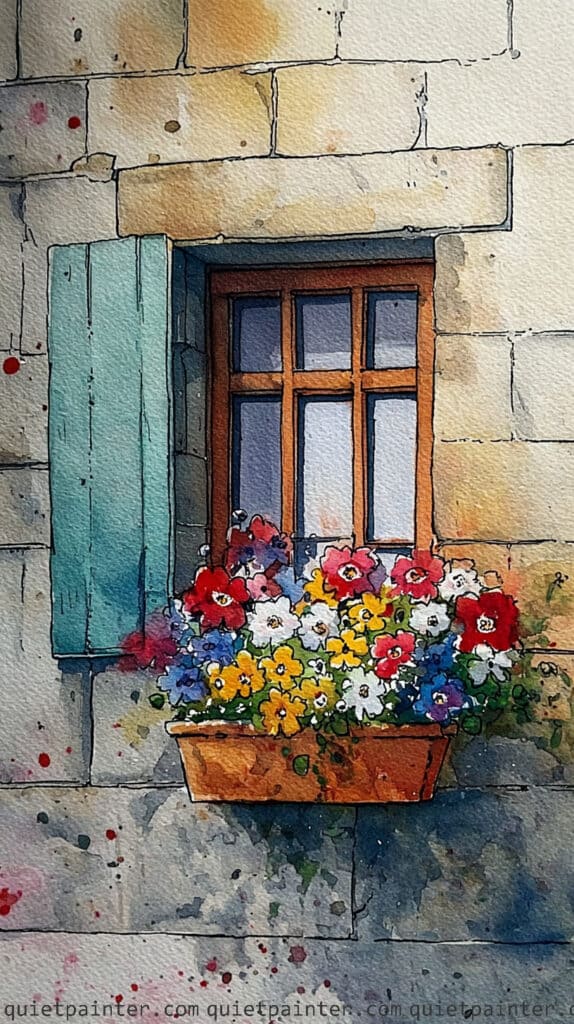
Begin with a light ink sketch to define the irregular, blocky shapes of the stone wall and the clean lines of the wooden window frame and single shutter. Apply a granulating wash of warm ochre and pale grey to the stones, dropping in tiny “splatters” of darker pigment while wet to mimic natural weathering and mineral spots. For the window panes, use a flat, desaturated blue wash, leaving the vertical mullions as unpainted white paper to provide architectural structure and a sense of reflected light.
To bring the window box to life, use a wet-on-dry technique to dapple a dense variety of blooms using saturated reds, yellows, and whites over a base of dark green foliage. Paint the wooden planter in a warm terracotta tone, adding a sharp, cool-toned shadow immediately beneath it to anchor the box to the wall. Finish the piece by using a fine brush to add a few loose “petal drops” of red and pink ink across the lower stones, which adds a sense of organic movement and realism to the scene.
Recommended Color Palette
| Element | Recommended Pigments |
| Stone Wall | Yellow Ochre, Raw Umber, Payne’s Grey |
| Floral Blooms | Cadmium Red, Lemon Yellow, Titanium White |
| Single Shutter | Cobalt Teal, Viridian (diluted) |
| Window Box | Burnt Sienna, Quinacridone Gold |
| Shadows & Glass | French Ultramarine, Cerulean Blue |
The Stone Arch Portal
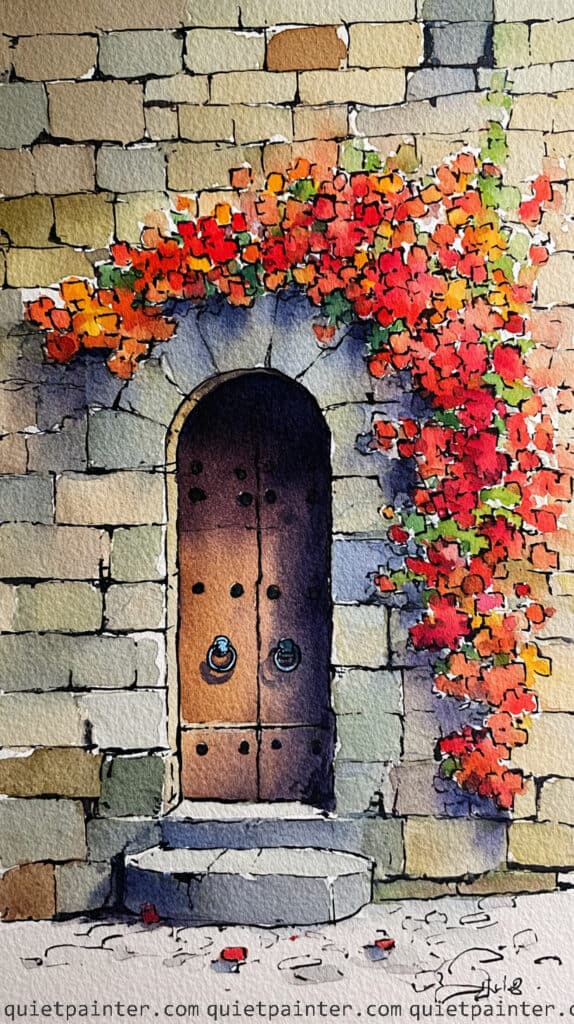
Begin with a light ink sketch to define the blocky stones and the tall, arched wooden door, keeping your lines broken and organic to suggest age. Apply a granulating wash of warm ochre and pale grey to the stonework, and while damp, “charge” in some darker umber into the crevices to create a three-dimensional effect. For the doorway interior, use a saturated wet-on-dry application of deep indigo or violet, leaving the wooden door as a warmer mid-tone to make it recede into the shadows.
To bring the focal point to life, use a stippling technique with concentrated red, orange, and yellow to dapple the cascading flowers on the right. Allow some of the brighter pigments to bleed into each other while wet, then add a few dark green leaves beneath for contrast. Finish the piece by glazing a crisp, cool shadow at the base of the arch and adding a few loose “splatter” dots of red near the steps to represent fallen petals.
Recommended Color Palette
| Element | Recommended Pigments |
| Stone Wall | Yellow Ochre, Raw Umber, Payne’s Grey |
| Wooden Door | Burnt Sienna, Sepia |
| Floral Canopy | Pyrrol Scarlet, Cadmium Orange, Hansa Yellow |
| Deep Arch Shadow | Indigo, Dioxazine Purple |
| Foliage & Details | Sap Green, Neutral Tint |
The Crimson Cabin Window
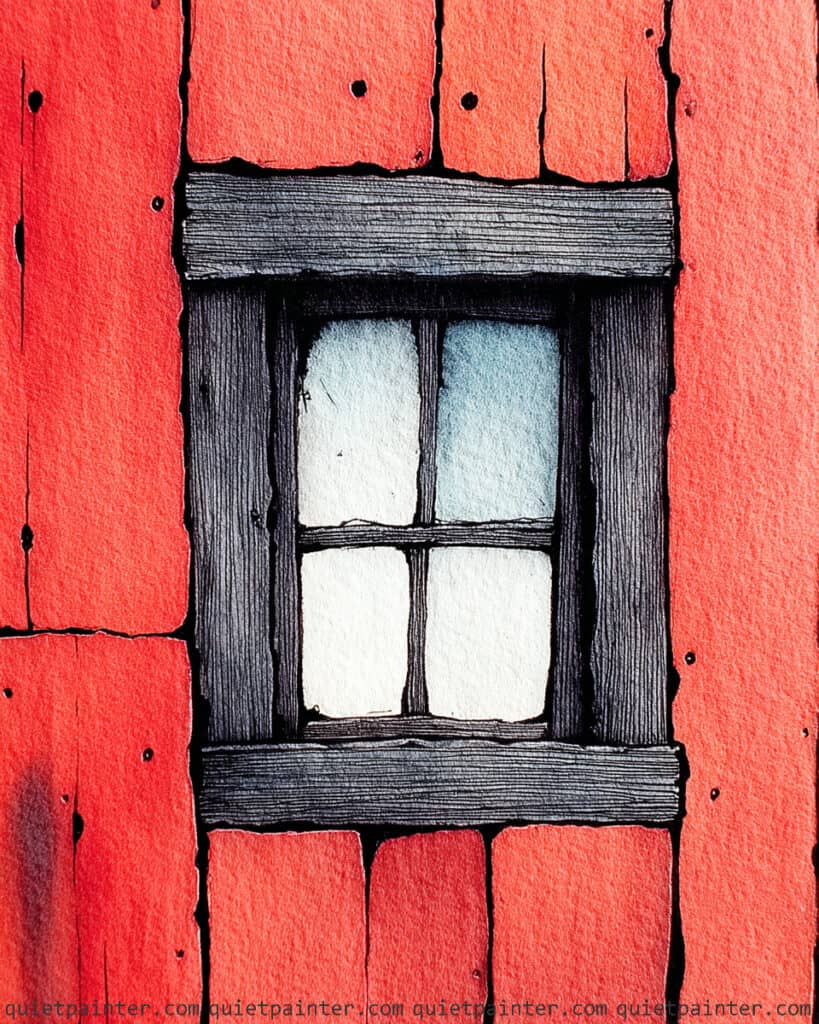
Begin by sketching the vertical lines of the wooden planks and the thick, rectangular window frame with a waterproof fine-liner, adding small knots and cracks to suggest aged timber. Apply a saturated flat wash of bright red across the wall, and while the paint is still damp, “charge” in a deeper crimson or burnt sienna near the edges of the planks to create a sense of shadowed depth. For the window glass, use a graduated wash of pale blue at the top that fades into the white of the paper at the bottom, mimicking a soft reflection of the sky.
Next, block in the heavy wooden frame using a variegated wash of charcoal grey and deep brown, ensuring you keep your strokes horizontal to emphasize the wood grain. Use a dry-brush technique with a highly concentrated neutral tint to add fine, dark lines along the frame and the plank seams, which heightens the weathered, rustic appearance. Finally, add a series of tiny, dark “nail head” dots along the planks and deepen the shadow on the left side of the frame to ground the window firmly into the wall.
Recommended Color Palette
| Element | Recommended Pigments |
| Crimson Wall | Cadmium Red, Pyrrol Scarlet, Burnt Sienna |
| Wooden Frame | Payne’s Grey, Raw Umber, Sepia |
| Window Glass | Cerulean Blue (highly diluted), Indigo |
| Cracks & Details | Neutral Tint, Lamp Black |
| Deep Shadows | French Ultramarine, Alizarin Crimson |
The Red Door Cottage
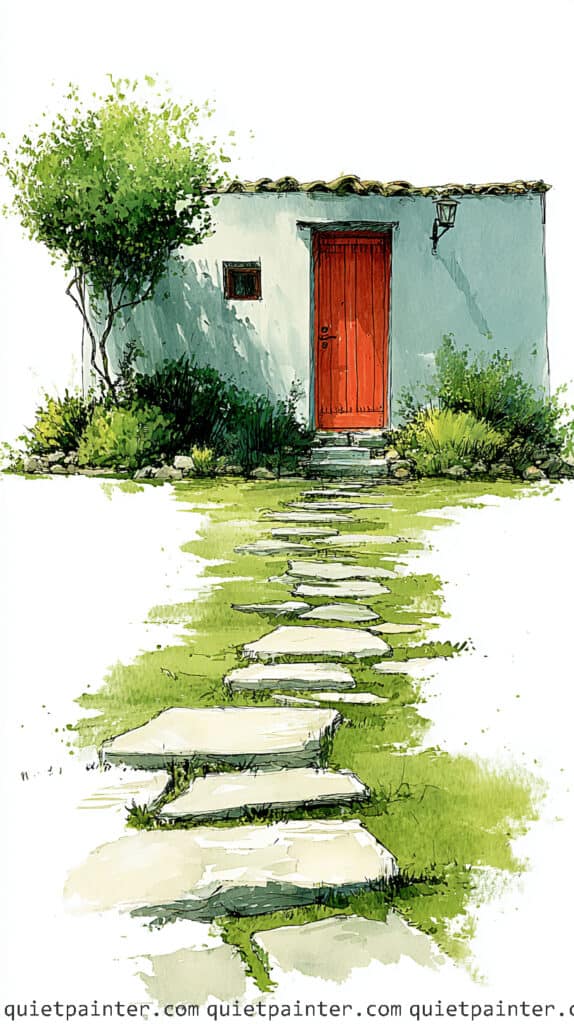
Begin with a light ink sketch to define the cottage, the vertical planks of the red door, and the irregular shapes of the stepping stones. For the white walls, utilize the white of the paper for the brightest highlights, then glaze a large, soft shadow across the left side of the building using a diluted variegated wash of cobalt blue and violet. For the door, apply a saturated flat wash of bright red, leaving thin slivers of unpainted paper along the plank edges to suggest a sun-drenched, weathered texture.
To bring the landscape to life, use a wet-on-dry technique for the foreground grass, layering bright lemon yellows into deep sap greens to create a sense of lush volume. For the large tree on the left, use a sponging or stippling motion to dapple leaves, ensuring you leave some “sparkle” of white paper to mimic sunlight filtering through the canopy. Finish the piece by washing the stepping stones in a very pale grey-brown and adding a few crisp, dark shadows at their base to firmly ground them in the soft, grassy path.
Recommended Color Palette
| Element | Recommended Pigments |
| Vibrant Red Door | Cadmium Red, Pyrrol Scarlet |
| Cottage Shadows | Cobalt Blue, Cobalt Violet |
| Lush Greenery | Sap Green, Lemon Yellow, Hookers Green |
| Stone Path | Raw Umber (highly diluted), Payne’s Grey |
| Trunks & Branches | Burnt Sienna, Sepia |
The Rustic Masonry Window
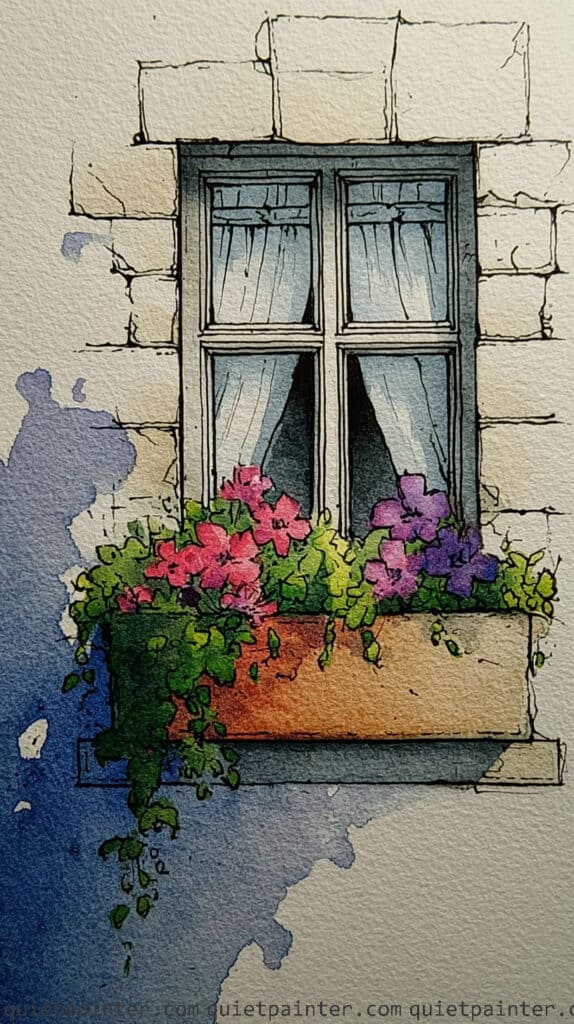
Begin by sketching the large, irregular stones of the wall and the wooden window frame with a waterproof fine-liner, using broken, expressive lines to suggest a weathered surface. Apply a granulating wash of warm ochre and pale grey to the stonework, and while the paper is still damp, “charge” in darker umber into the deep crevices to create a sense of three-dimensional depth. For the window glass, use a negative painting technique around the white lace curtains, filling the background with a deep, desaturated violet to make the delicate patterns stand out against the glass.
Next, block in the window frame with a saturated flat wash of warm brown, leaving a few tiny slivers of white paper on the edges to represent sunlit highlights. Use a stippling motion to paint the vibrant pink and purple flowers in the window box, layering different saturations over a base of bright sap green to create a sense of full, rounded blooms. Finish the piece by glazing a cool-toned shadow beneath the window sill using a diluted Payne’s Grey, which grounds the planter and defines the strong, directional light hitting the facade.
Recommended Color Palette
| Element | Recommended Pigments |
| Stone Wall | Yellow Ochre, Raw Umber, Payne’s Grey |
| Window Frame & Box | Burnt Sienna, Quinacridone Gold |
| Flower Blooms | Quinacridone Rose, Dioxazine Purple |
| Window Interior | Cobalt Violet, Indigo (highly diluted) |
| Shadows & Details | French Ultramarine, Neutral Tint |
The Kingfisher’s Latch
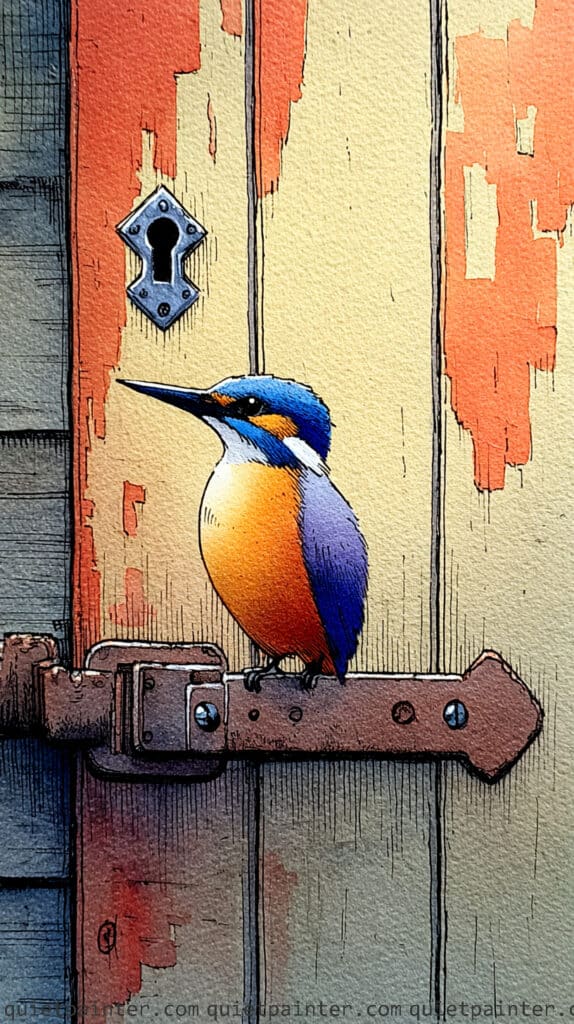
Begin by sketching the kingfisher and the latch with a fine-liner, using short, vertical strokes to define the areas of peeling paint on the door. For the door’s background, apply a variegated wash of warm yellow and pale green, then use a wet-on-dry technique to layer a vibrant, saturated orange over the top, leaving irregular “flakes” of the underpainting visible. For the bird, use a wet-on-wet application to blend bright blue into deep violet on its wing, and a warm, glowing yellow-to-orange gradient for its breast.
Focus on the metal latch by applying a textured, granulating wash of grey and sienna to mimic rusted iron, adding tiny dark dots for the rivets. Use a fine rigger brush to add delicate, hair-thin lines on the bird’s head and wings to suggest individual feathers, and a sharp, dark indigo for its eye and beak. Finish by glazing a soft, vertical shadow behind the latch and the bird’s tail to ground them against the wooden planks and provide a sense of three-dimensional depth.
Recommended Color Palette
| Element | Recommended Pigments |
| Kingfisher Wings | Cobalt Blue, French Ultramarine, Dioxazine Purple |
| Kingfisher Breast | New Gamboge, Cadmium Orange, Pyrrol Scarlet |
| Peeling Door Paint | Hansa Yellow, Pyrrol Orange, Sap Green |
| Metal Latch | Payne’s Grey, Burnt Sienna, Raw Umber |
| Details & Shadows | Indigo, Sepia, Neutral Tint |
The Rose-Framed Window
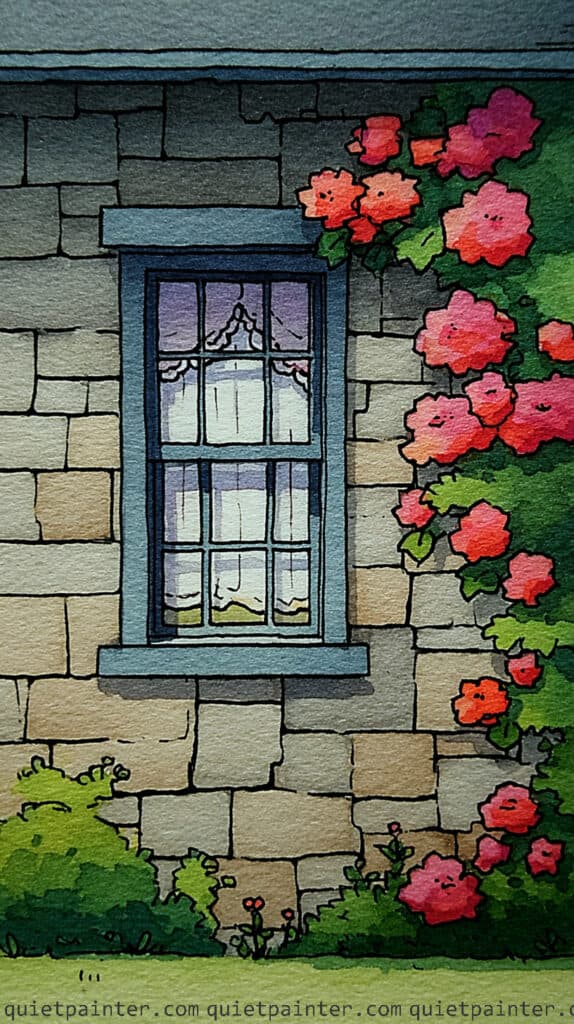
Begin by sketching the blocky, irregular stones and the multi-paned window with a waterproof fine-liner, keeping the lines for the flowers loose and circular. Apply a variegated wash of warm ochre and pale grey to the stone wall, and while the paper is damp, drop in a deeper neutral tint into the recessed mortar lines to create a three-dimensional effect. For the window, use a saturated wet-on-dry application of deep violet and blue for the glass, carefully painting around the white lace curtains to preserve the paper’s highlight.
To bring the roses to life, use a stippling technique with concentrated pink and red, allowing the colors to bleed together for a soft, petal-like texture. Surround the blooms with a mix of sap and forest green leaves, using gestural strokes to show the vine climbing up the right side of the frame. Finish the piece by glazing a crisp shadow beneath the window sill and the overhanging flowers to ground the architecture and emphasize the bright, directional sunlight.
Recommended Color Palette
| Element | Recommended Pigments |
| Window Frame | Cobalt Teal, Payne’s Grey |
| Roses | Quinacridone Rose, Cadmium Red |
| Stone Wall | Yellow Ochre, Raw Umber, Neutral Tint |
| Window Glass | Indigo, Dioxazine Purple |
| Foliage | Sap Green, Perylene Green |
The Sunlit Garden Path
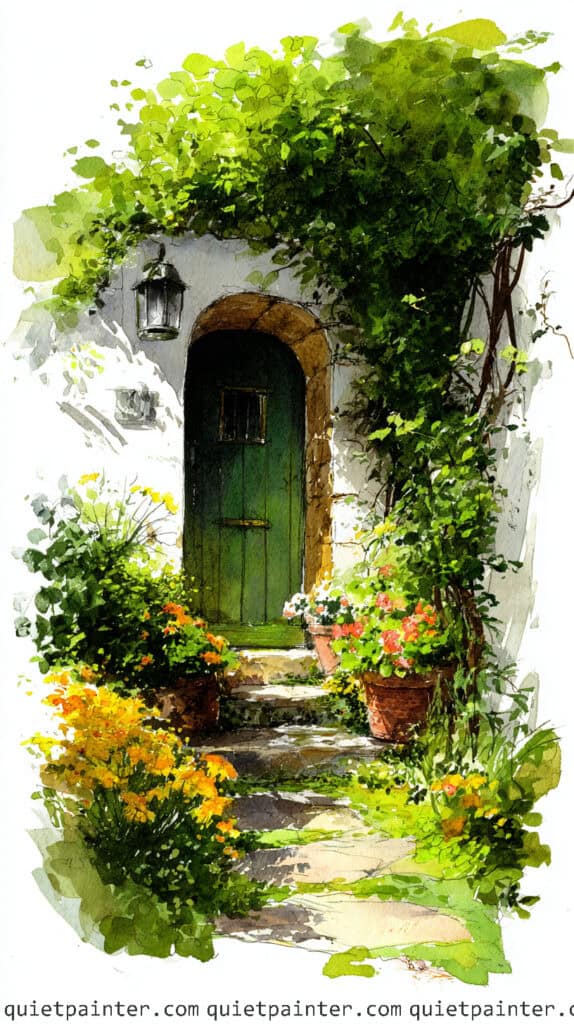
Begin by loosely sketching the stone path and arched doorway, leaving the areas for the bright yellow flowers completely white to preserve the paper’s brilliance. Apply a variegated wash of sap green and lemon yellow for the overhanging canopy, dropping in darker forest green while wet to create a sense of shadowed volume. For the door itself, use a saturated flat wash of deep olive or forest green, ensuring the archway stones remain a warm, sun-bleached ochre to frame the entrance.
To bring the foreground to life, use a stippling technique with concentrated cadmium yellow and orange for the flowers on the left, layering them over a soft green base. Glaze long, cool-toned shadows across the stone steps and path using a diluted violet or blue wash, which helps define the direction of the sunlight and adds weight to the structure. Finish by adding thin, gestural brown lines for the vines and using a fine brush to dapple white highlights on the flower pots to mimic the glare of a bright afternoon.
Recommended Color Palette
| Element | Recommended Pigments |
| Garden Canopy | Sap Green, Lemon Yellow, Hooker’s Green |
| Arched Door | Perylene Green, Olive Green |
| Bright Florals | Cadmium Yellow, Cadmium Orange, Permanent Rose |
| Stonework & Steps | Yellow Ochre, Burnt Umber, Raw Sienna |
| Shadows & Path | Cobalt Violet, Payne’s Grey (highly diluted) |
The Pink Wall Window
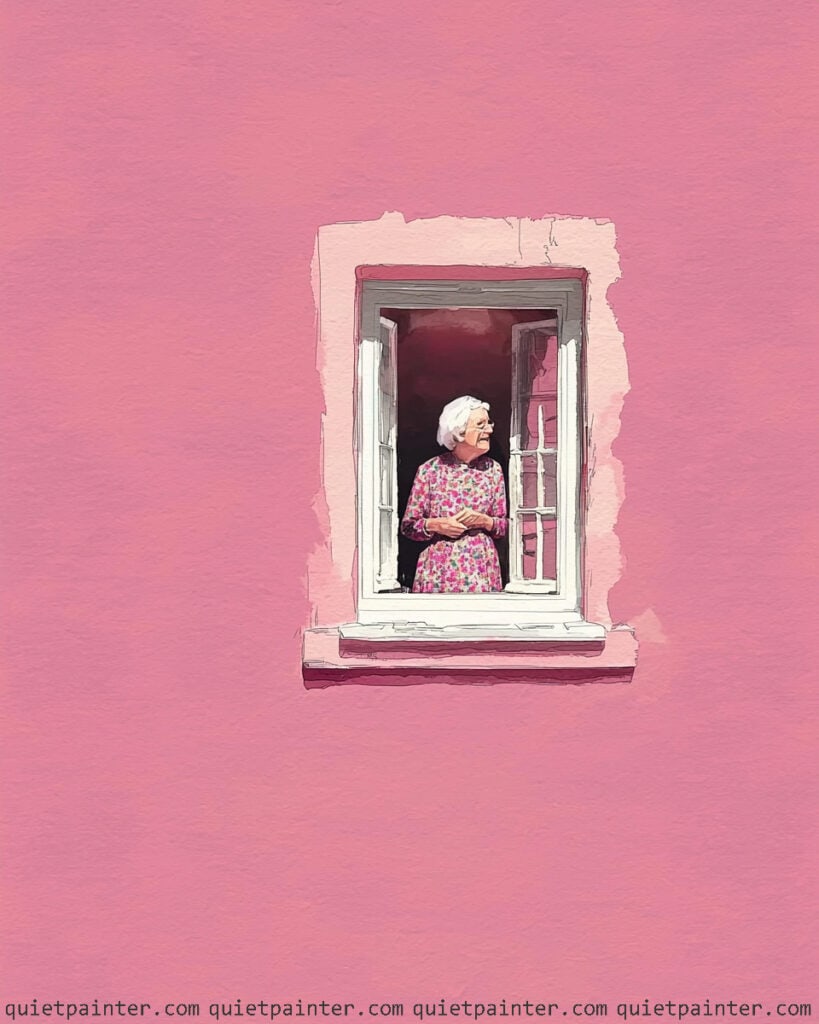
Begin by applying a vast, even flat wash of soft pink across the entire paper, leaving only the rectangular window and the immediate stone trim as white space. While this large area is still damp, subtly “charge” in a slightly warmer or cooler pink in various sections to create a natural, hand-painted texture rather than a solid block of color. For the window’s interior, switch to a wet-on-dry technique using deep crimsons and maroons to create a shadowed, recessed space that makes the woman’s figure pop forward.
To paint the figure, use a fine round brush to dapple a complex floral pattern on her dress using tiny points of violet, green, and pink over a light base. Carefully define her white hair and facial features with very diluted grey-blue shadows, ensuring you maintain the soft, natural light coming from the side. Finish the piece by glazing a crisp, horizontal shadow beneath the windowsill and along the inner edge of the open window panes to provide structural depth and anchor the scene firmly within the sea of pink.
Recommended Color Palette
| Element | Recommended Pigments |
| Monochromatic Wall | Opera Pink, Potters Pink, Rose Madder |
| Window Interior | Alizarin Crimson, Perylene Maroon |
| Floral Dress | Quinacridone Magenta, Sap Green, Cobalt Violet |
| Shadows & Frame | Payne’s Grey (diluted), Neutral Tint |
| Skin Tones & Highlights | Yellow Ochre (diluted), Titanium White |
The Gothic Cathedral Window
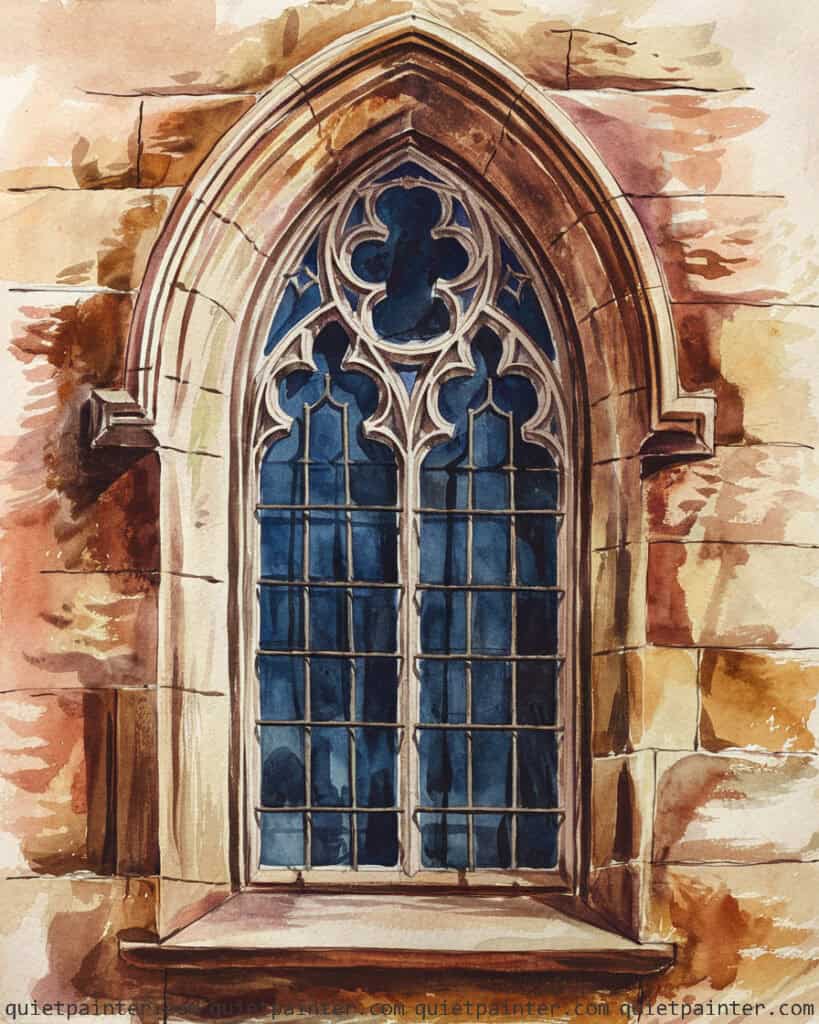
Begin with a precise pencil sketch to capture the intricate tracery of the gothic arch and the geometric grid of the window panes. Apply a variegated wash of warm sienna and ochre across the stonework, and while the paper is still damp, “charge” in darker burnt umber to create the mottled, aged texture of the sandstone. For the window panes, use a saturated wet-on-dry application of deep indigo, carefully cutting around the light-colored stone mullions to create immediate structural depth.
Once the initial layers are bone-dry, use a dry-brush technique with a mix of sepia and neutral tint to add fine cracks and gritty details to the individual stone blocks. Focus on the deep shadows within the arch and beneath the windowsill, using a concentrated glaze of ultramarine and violet to emphasize the recessed nature of the window. Finish the piece by adding subtle, vertical reflections in the glass using a slightly lighter blue, which gives the window a realistic, polished sheen against the rough stone exterior.
Recommended Color Palette
| Element | Recommended Pigments |
| Sandstone Wall | Raw Sienna, Yellow Ochre, Burnt Umber |
| Gothic Window Glass | Indigo, Prussian Blue |
| Deep Shadows | French Ultramarine, Cobalt Violet |
| Stony Texture | Neutral Tint, Sepia |
| Highlights | Titanium White (sparingly) |
Conclusion
There is a unique joy in bringing a simple entrance to life with a splash of pigment. We hope these 32 prompts encourage you to see the artistic potential in the everyday scenes around you.
Don’t forget to download the coloring pages to practice your techniques or test out new color palettes without the pressure of a blank page. Grab your brushes, find a comfortable spot, and let your imagination wander through these painted doorways. Happy painting!